
At Lift Up Concrete Lifting, we know that when it comes to your property, you want solutions that last. Below, we’ve gathered answers to the most common questions about our concrete lifting process, materials, and service standards—so you can make an informed decision with confidence.
What do you use to lift the concrete?
We use grout injection, not foam.
Our grout is a cement-based mix similar in composition to the compacted road base that was placed under your concrete in the first place, without the larger aggregate.
For comparison, if your concrete were completely removed and replaced, no contractor would place foam underneath it. They would place compacted road base. That is why grout provides a more durable, stronger and longer-lasting result than foam. Foam formulated to approach the density and strength of road base is significantly more expensive, so most foam applications use a lighter, lower-strength product than what belongs beneath concrete that needs to support vehicles, trucks and heavy equipment.
Is it a long-term solution?
Yes.
With grout injection, we use hydraulic rams to compact and pump the grout beneath the slab, filling voids and stabilizing the concrete above. Combined with the natural strength of grout, this creates a long-term repair that can handle the weight of semi-trucks. We use the same material strength on a residential driveway that we use on an industrial slab. Nothing is downgraded for smaller jobs.
How long have you been in business?
We have been lifting concrete since 2007.
What matters here is that concrete lifting is what we do. We have not moved between different corners of the contracting world. That focus has let us refine our process and deliver consistent results for both residential and commercial clients, while staying at a competitive price point for residential work.
How are your reviews?
Excellent.
We have nearly two decades of reviews available across multiple platforms, from this year all the way back to our earliest jobs. We do not remove or hide customer feedback. What you see is what our customers actually wrote.
That transparency reflects our commitment to quality and integrity on every job we take on.
How reliable are you?
We take pride in being reliable and professional.
When we say we will do something, we do it on time, as promised, and done correctly. Our clients trust us because we consistently deliver what we commit to, without surprises or delays. It is also why we strongly encourage in-person estimates, so expectations are clearly defined up front and then met.
What percentage of your clients are commercial?
Roughly half of our clients are commercial and half are residential.
Engineers and property managers choose our grout injection method for its strength and long-term performance. Our commercial work includes projects for:
- Hill Air Force Base
- The Church of Jesus Christ of Latter-Day Saints
- Jiffy Lube
- CBRE
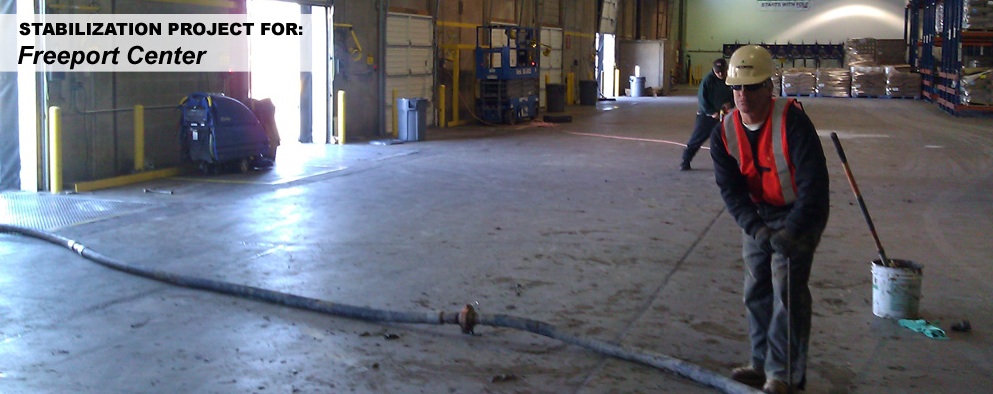
- Freeport Center
- Boyer Company
- And many more
When can I drive on my concrete after it is lifted?
Typically within 24 hours.
In some cases, such as parking garages, the concrete is ready for use immediately. Our lifting process minimizes disruption, so your driveway, walkway or business operations can return to normal quickly.
Why is lifting better than removing and replacing concrete?
There are several key reasons:
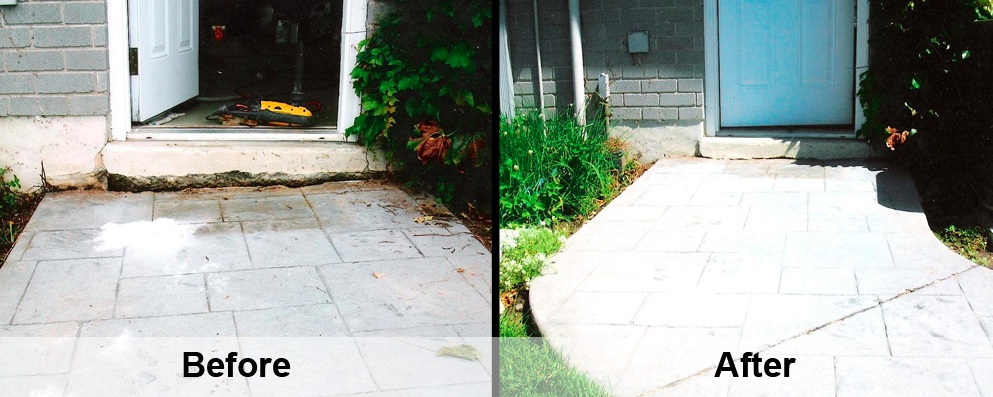
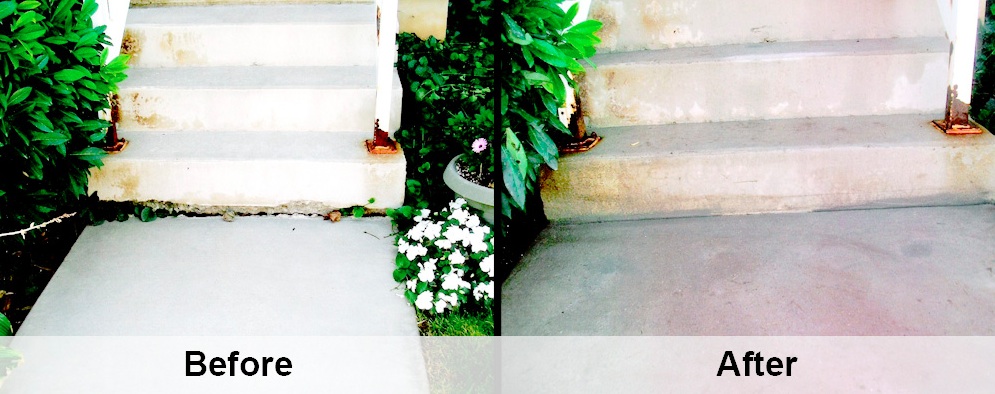
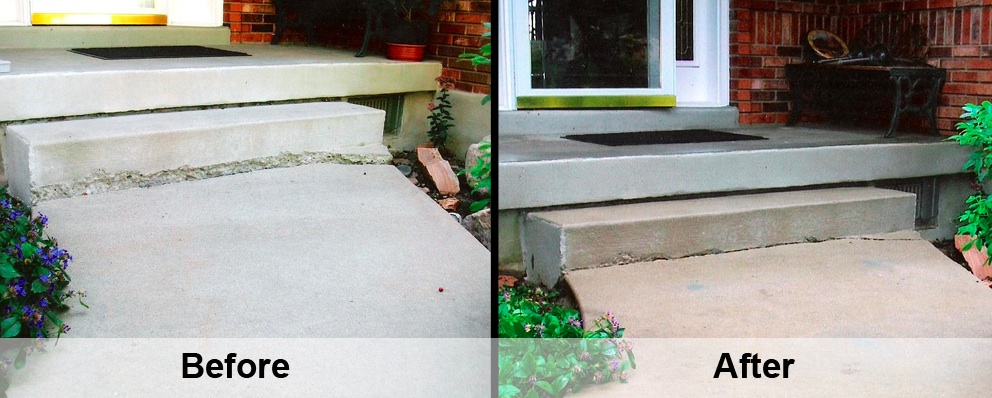
- Cost savings: Lifting typically costs one-third to one-fifth of full replacement.
- Speed: Ready for use in one day, not weeks.
- Warranty: Our lifting work carries a strong warranty. We warranty both lifting the concrete back toward its original position and pressure grouting to help prevent further settling. Many companies in our industry warranty only the pressure grouting and stabilization portion.
- Aesthetics: Lifting preserves the original slab, so you avoid the mismatched patchwork of new concrete poured against old.
- Preservation: We save good slabs that do not need to be replaced, which avoids unnecessary waste and cost.
Why is lifting better than grinding concrete?
Grinding can smooth an uneven edge temporarily, but it does not solve the underlying problem.
- Grinding only addresses the surface, not the soil voids underneath.
- The slab continues to settle after grinding.
- It can leave a raised lip on the far side of the joint, which is easier to catch a heel on than the original edge.
- It does not restore proper grade or slope, which affects drainage.
Lifting restores the slab’s correct level and slope, which addresses standing water and ice hazards and helps prevent future settling.
What sets you apart from other companies?
Several things make Lift-Up Concrete Lifting stand out:
- We use a high-strength grout rather than foam.
- Our hole pattern is engineered for even lifting, thorough compaction and the correct strength per square foot.
- We bring commercial-grade materials to every job, big or small.
- We are licensed and insured, with nearly two decades of concrete lifting experience.