Author Archives: admin

Concrete Leveling Can Prevent Fall Injuries

Concrete Leveling

Concrete leveling can eliminate trip hazards and make your surfaces even and smooth again, and that’s important for your safety and the safety of your family, your guests and your customers.

Concrete may be one of the sturdiest building materials used today, but external factors can prompt the need for maintenance. Concrete leveling can help two some of the main problems you may encounter: sinking and settling.

Who Needs This Service?

Do you own property with a patio, driveway, staircase, walkway or pool deck? If you own a home, you probably have guests coming and going frequently. You may have active children or aging parents. If your concrete surfaces are sinking or heaving, that’s an automatic safety issue and should be dealt with immediately.

If you rent out your home or property, concrete leveling is also an essential service. You’re responsible for keeping your property safe and functional. If you own a commercial building, the same rules apply.

Are you the title owner to a building or home with settled, uneven surfaces or structures? Then concrete leveling is a cost-effective solution for you.

Why Does it Settle?

Concrete shifts downward or upward after installation due to soil settlement. While most professionals compact the soil, it’s nearly impossible to eradicate all of the air pockets beneath the structure. Over time, the air escapes and the soil sinks, causing the concrete to shift with it.

Conversely, concrete can heave upward and compound the settling issue, especially in the winter. Frost heaves can appear if moisture underneath the slab freezes and expands.

The combination of these two factors can leave your driveway, patio or walkway uneven and in need of repair. An uneven surface isn’t only unsightly, it’s a trip hazard at worst and a nuisance at best.

Signs You Need Expert Help

In general, the rule of thumb is that when the surface sinks lower than a half-inch, concrete leveling is the preferred repair method. You may see signs that settling may eventually affect your structure, such as water draining around the concrete and causing erosion at an alarming rate. As a preventive measure, you can rework the drainage system so the soil stays intact, and that might help stop the sinking before it gets worse.

If the settling has affected your home’s foundation, you may need to talk with an engineer or foundation specialist and get a professional assessment, but concrete leveling can help in this scenario.

If you have any issues with your garage floor, patio, porch, steps, driveway or other structure, call Lift-Up Concrete today for a free concrete leveling quote.

Can Concrete Lifting Fix Your Problem?

Concrete Lifting

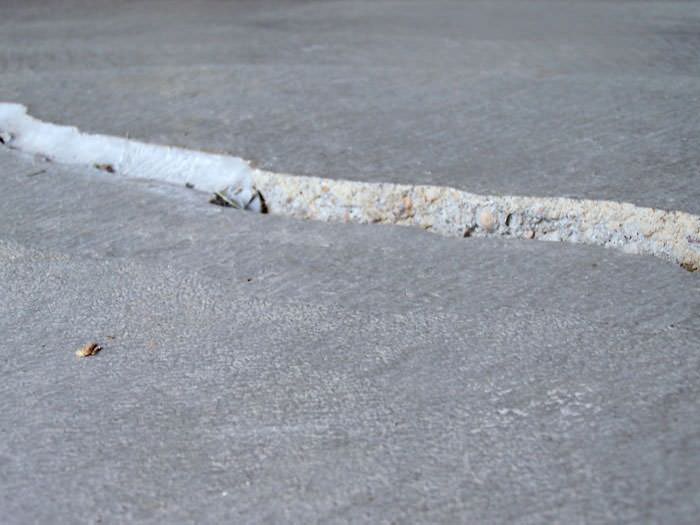
You may have heard that concrete lifting is a cost-effective way to fix your damaged concrete, but you may be skeptical. Is this method ideal? Wouldn’t it be easier to just tear out the concrete and start over?

Concrete lifting, also called slab jacking, repairs concrete at a fraction of the price of a complete tear-out job. It’s an innovative, affordable way to repair the structure already in place, and the end product will be stronger than ever.

What Materials and Tools Are Used?

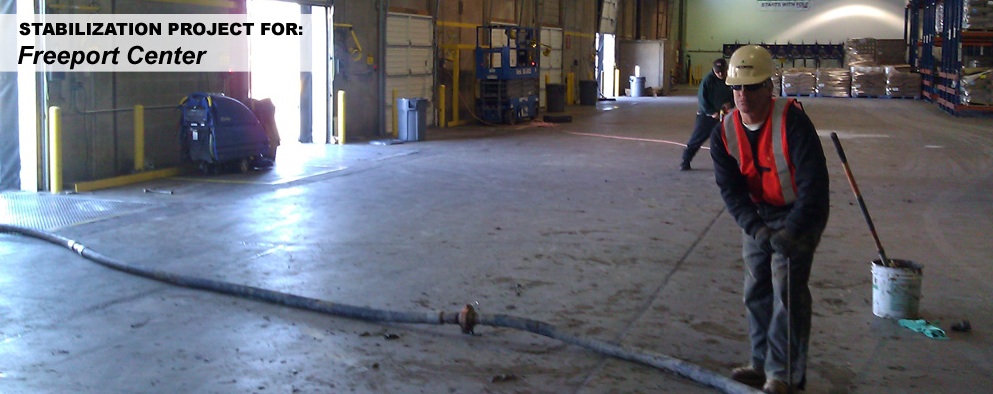
Three primary tools are used for this project: a drill, a mixer and a pump.

The drill is used to create a small hole in the surface of the sunken concrete that reaches all the way through to the underside. Sometimes called a coring machine, this piece of equipment is designed to drill through the concrete but create the least amount of dust possible.

The mixer is used to combine the ingredients that make up the grout and keep it evenly mixed until it is time to inject it with the pump. Grout consistency is key to a sturdy final product.

The hydraulic pump injects the grout mixture at an even pace — it has the capability to deliver pressure up to 100 pounds per square inch.

What’s the Grout Made Of?

The grout that’s injected underneath the sunken area is similar to the material used to create the structure in the first place.

The concrete lifting professional will use Portland cement, water and limestone dust or sand to create a paste-like consistency. Additional materials such as bentonite also may be used. This helps lubricate the mixture as it fills the space beneath the slab. Other expanding additives also help prevent the grout from shrinking as it dries.

After the material cures, it is just as strong as any concrete, and the added stability keeps your patio, driveway or garage floor sturdy for years to come.

What Is Concrete Lifting Good for?

Concrete lifting is the ideal repair method for any concrete structure that has settled, such as a driveway, garage floor, sidewalk, porch or pool deck. In fact, slab jacking is the primary way to lift a deck surrounding a pool with a vinyl liner. The grout mixture can be thickened to reduce the chance of damage to the liner — an expensive fix.

Do you think this repair method might be good for an area at your home? Talk to Lift-Up Concrete and learn more about the strength and durability concrete lifting provides.

Sinking Concrete: 4 Common Causes

Sinking Concrete

Sinking concrete is an eyesore and a safety hazard. Even when you take good care of your property, you can end up with sinking concrete. What can you do about it?

One of the four common problems listed below is often responsible for sinking concrete. Take a look and see if you can spot your issue, so that you can repair the conditions contributing to the degrading concrete. Once you take care of the source of the problem, you can fix the concrete slab and rest assured that it won’t continue to sink any longer.

Improper Grading

Grading may be one of the single most important factors affecting concrete stability. When the ground is sloped toward a foundation, patio or driveway, runoff spreads and pools underneath, nearby or on top of the slab. Many times, if another structure such as a deck is built on top of a poorly graded slab, it then may become impossible to see the problem or notice pooling water.

Detached Gutters or Downspouts

When you’re dealing with sinking concrete, you may be looking down at the ground to find the cause of the issue, but you may need to look up instead. Proper drainage starts with a working gutter and downspout system. If your gutters are rusting and worn out, they might be pulling away from your home.

If gutter maintenance has been neglected, you could have a blockage that’s preventing the water from flowing properly through the downspout. If the system is simply designed improperly, water could be pooling next to the foundation or nearby concrete.

Undetected Leak

If you have plumbing lines running from the street’s water main to your home or an underground sprinkler system, a leak could be saturating the soil underneath your concrete and you may not even notice. If you have wet soil that is supposed to support your concrete, you could have a major problem.

High Water Table

If the property’s patio or driveway was laid without regard for the water table level, heavy rain could cause erosion in the soil underneath, washing away the solid ground and making sinking a real possibility.

Even the most steeply sinking concrete can be repaired cost effectively. You do not have to completely tear out and replace the entire structure. That’s an expensive job and a waste of money, especially when you have other, cheaper options available that produce quality results.

You can opt for slabjacking repair, a method that injects a stabilizing grout underneath the sinking concrete, raising it back to its previous level. This method only takes a few hours, and you can walk on the concrete right away.

If you’re interested in having your sinking concrete repaired, contact Lift-Up Concrete today and get a free quote.

How You Can Avoid Concrete Repair Scams

Avoid Concrete Repair Scams

You know your driveway or patio needs concrete repair, but maybe you haven’t gotten around to making a phone call to a vetted contractor quite yet. In the meantime, a crew of workers shows up at your door, offering to mend the cracks and sinking slabs that have become quite an eyesore. Do you take them up on their offer?

Even though you would like to believe the best and trust everyone you meet, this situation puts you at risk of falling for a common concrete repair scam.

If you’d rather not pay a second time to fix shoddy repairs, follow the important steps below when hiring anyone to conduct concrete repair on your property.

Get a Quote from a Trusted Contractor

For the most part, it’s not wise to hire someone who shows up on your doorstep. Instead, you should look into a concrete contractor’s background. Read reviews and call references. Check their standing with the Better Business Bureau. Then get a detailed quote in writing before any work is started.

When you’re paying someone to carry out work on your home, you’re making an investment. The best investments are made with thought and consideration. If you never heard of a concrete repair team until the day they randomly showed up to offer their services, they probably can’t be trusted.

Ask for Detailed Information on the Damage

Any concrete repair contractor with experience in their field can tell you exactly why your structure has sustained damage. Whether the problem arose due to shrinking, settling or an improper initial installation, they’ll diagnose it and be able to explain it to you in detail.

If they can’t, you know you’re dealing with a novice, and it’s best to look elsewhere for concrete repair.

Don’t Fall for Common Tricks

One of the common scams is claiming you’ll get a “once-in-a-lifetime deal.” A scammer might tell you they have extra concrete and they have to use it that day, so they’ll give you a steep discount and do the work right then and there. This is a deal you should pass up.
No worthy concrete repair contractor canvasses neighborhoods in an attempt to get rid of “extra” material.

Another common trick is to make you feel like you’re being included in an elite group. They might mention the names of a few people in the neighborhood, and they might even lie, saying your neighbors told them to come to you next so you could join in this special deal.

If you’re hiring anyone to make concrete repairs based on the recommendation of a neighbor, call that neighbor to confirm before you hand over the money.

A Bad Repair Costs More in the Long Run

If concrete repair is completed incorrectly, you’re going to have to pay to have it removed, then you’ll have to pay again to fix the original problem. Don’t expect to chase down the scammer and get your money back or make them do it over again. They probably skipped town with your cash, and they probably don’t know how to make repairs correctly either.

If you’re looking for quality work from a team with a long list of satisfied customers, save yourself a whole lot of trouble and contact Lift-Up Concrete first when you need concrete repair for any structure on your property.

Fix Concrete Damage

4 Reasons to Fix Concrete Damage

Concrete damage is detrimental to your home or business, so don’t wait too long to fix it. Take a look at these four reasons you should make repairs as soon as possible.

It’s a Safety Hazard

Sunken slabs, chipped surfaces and tilting patios could lead to injuries. Falling is a leading cause of injury in the United States, so eliminate this risk by ensuring all concrete surfaces are even. A simple repair is all that is needed to improve the safety of your family and guests.

You Could Be Liable for Injuries

If a fall does result in an injury and the reason is tied to improperly maintained concrete, the property owner is going to be held liable. Particularly for business owners, it’s vital to make sure trip hazards are eliminated from all walking areas. While insurance is a good safeguard, it might not cover claims in certain instances. For example, if it is proven that a business owner knew about damage but delayed repairs, it could become a problematic situation that may affect a company’s finances.

Your Curb Appeal Will Sink

If you’re thinking about selling your home and you have damaged concrete, it’s going to affect your property’s marketability. Your home value will sink like your concrete. Even if you’re not planning on selling anytime soon, don’t you want your home to stand out in your neighborhood for the right reasons? Make sure your property is known for its meticulous appearance, not its problems.

It Might Violate Building Code

Sinking concrete slabs and other concrete damage might leave your structure, especially if it’s a flight of stairs, in violation of local building code. This is especially an issue if the problem is at a commercial property. It’s better to correct the issues right away through straightforward, cost-effective repairs that will pay off. A repair puts you back in compliance and relieves all your worries.

Get Concrete Lifting Right Away

If a slanting, sinking slab is causing you worry, it’s time to call a concrete lifting contractor. Modern repair methods like slabjacking and professional tools and equipment can get your concrete surfaces restored in less than a day. There’s no need to put it off for the future when you can see high-quality results immediately.

Forget paying for a complete tear-out job. Stabilizing grout injected beneath the tilting surface will restore your stairs, driveway or walkway to its previous even level and you can walk and drive on it the same day.

Call Lift-Up Concrete today for a free estimate and to learn more about why concrete damage should be remedied as soon as possible.

Get Concrete Driveway Repair After a Long Winter

Concrete Driveway Repair

Winter is the roughest season for your concrete driveway, due to the ice, snow and extreme
temperatures.

A concrete driveway is durable and resilient, but as strong as it is, it can crack and sink, and that unsightliness isn’t what you want to look at every day. Here’s how damage occurs, and more importantly, what you can do about it.

Soil Washout

Think about all the precipitation your property gets every winter, whether in the form of snow or rain. If your home is situated on a slope or an area with inadequate drainage, water can wash away all the soil that’s supporting a concrete structure — foundations, patios and even driveways.

Without adequate support, the heaviness of the structure starts to work against it. Cracking and
sinking can quickly follow.

Soil Settling

When soil contains moisture, winter’s low temperatures cause it to freeze and expand, pushing
up the concrete on its surface. Once winter fades, temperatures rise and the ice melts, soil will
sink.

This can leave the concrete cracked and sunken as well. Also, over time, the air pockets within
soil evaporate. This settling also will affect the integrity and evenness of your driveway.

Improper Use

Your driveway may be sinking for other reasons as well. For instance, if you’ve parked a heavy
dumpster or machinery on the concrete, the driveway may not be able to withstand the load.

What Can You Do?

You don’t have to settle like your concrete driveway. You can take control and change how it
looks. Your first step? Hire a professional slabjacking company.

Slabjacking involves stabilizing existing concrete. Before you pay thousands of dollars to rip out
your concrete and replace it, consider what slabjacking has to offer you.

We can come to your home and evaluate your driveway’s condition. If it can be repaired — and
even the worst damage usually can be — we’ll begin by drilling small holes into the surface of
the sunken areas. Using specialized equipment, we will inject grout beneath the surface, filling
the empty space caused by soil compaction or erosion.

The grout we use is a material designed to dry fast, so you can continue using the area as usual.

If you opted for a complete replacement, the project would be take longer and be much more
expensive and disruptive.

Hire a Professional Restoration Team

Spring is the perfect time of the year to make repairs. If you’d like to learn more about how
slabjacking can help fix your concrete driveway, contact Lift-Up Concrete today for a free quote.

Repairing a Sunken Garage Floor

Sunken Garage Floor Repair

It’s time to address that sunken garage floor that just gets more uneven every year. You’re tired of looking at the cracked, shifting slab sections and you’ve decided you’re going to completely replace the concrete.

Before you spend money unnecessarily on a complete tear-out job, consider making repairs instead. Why commit to an expensive, lengthy, involved project when a one-day solution is available?

Sunken Concrete Can Lead to Accidents

Have you tripped while walking to your car? A cracked and sunken portion of a garage floor can easily lead to injuries. If the damage is significant enough, your car might bottom out when you pull into the garage. This could damage the bumper or undercarriage.

If you’re trying to sell your home, a sunken garage floor is not only a liability for injuries, it’s also a turnoff for potential buyers. And if a home inspector deems it a safety issue, you might be forced to repair it.

Concrete Shifts and Sinks Over Time

One of the main reasons concrete garage floors sink is because the ground underneath settles. When the garage was built, the builders packed down the soil with a special machine to prepare it for the poured concrete slab.

But even with the most high-tech equipment on the job, it’s impossible to completely eradicate all the air pockets beneath the soil’s surface. Over time, as these air pockets evaporate, the foundation for your garage floor sinks, and the concrete along with it.

Serious stormwater runoff also can affect the stability of your garage floor. Too much soil erosion can lead to destabilization, which can lead to sinking.

What’s the Best Way to Repair the Damage?

Common sense might tell you the only option you have is to completely rip up the sunken slab, but that’s not accurate. If you haven’t heard about this repair tactic before, it’s time to get in the know: Slabjacking is the answer for your home.

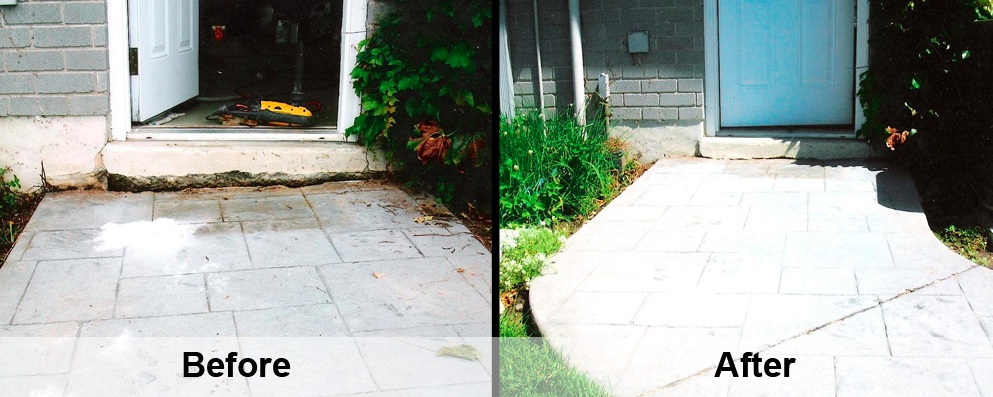
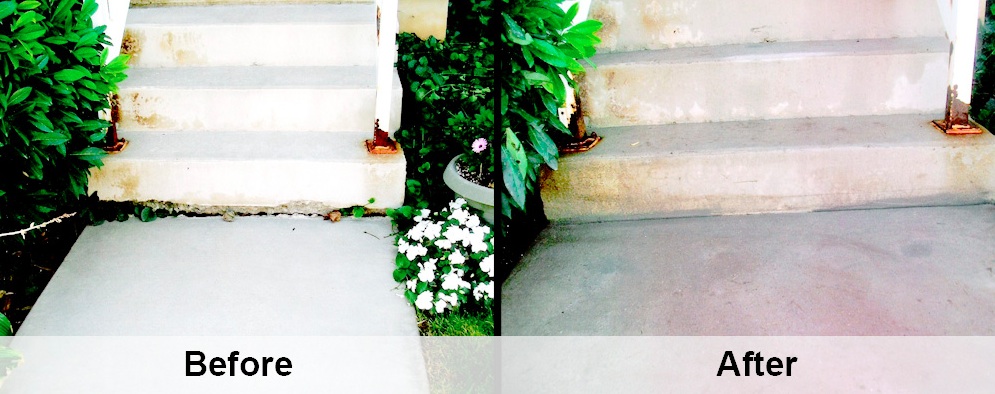
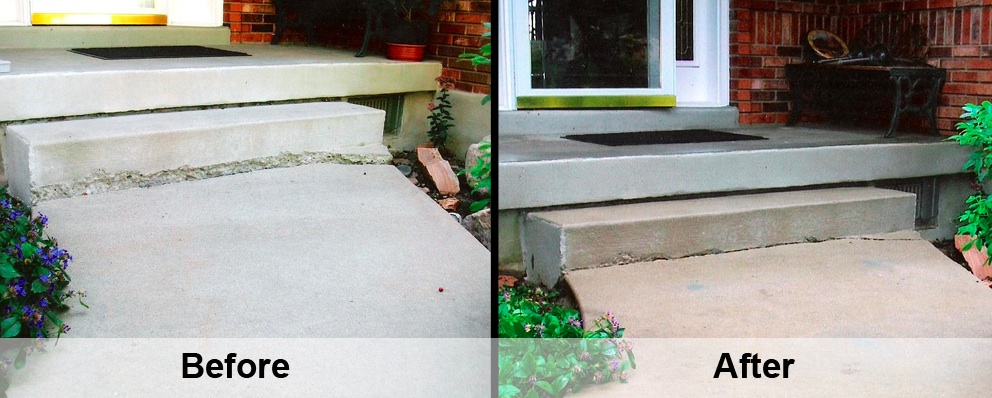
A slabjacking company will drill a small hole in the sunken portion and inject stabilizing grout beneath the surface. This procedure will raise the section back to its previous even level. Then the crack is filled in along with the drill hole.

Want to know the best part? You can leave all of your tools and equipment in your garage while this takes place, which will only take a few hours. The pump used to inject the grout is strong enough to lift the entire slab and everything that’s on it.

No noise, no dust, no waste. Also, it’s a fraction of the price of a tear-out.

Get rid of your sunken garage floor and schedule a fast restoration — call Lift-Up Concrete today for a free estimate.

Concrete Repair Saves Cities Money

Municipal Concrete Repair

Concrete repair can save cities and towns money, as compared to completely replacing damaged concrete surfaces and structures. And saving money is always positive, especially when your city or town is trying to stick to its budget and stay on track.

Common Causes of Municipal Concrete Damage

Sidewalks and public parks are paved with concrete because it’s economical and it’s one of the most durable building materials available. It can be installed affordably and it lasts for decades.

However, every building material has its weaknesses and tendencies towards damage. Concrete can crumble, crack or sink, due to two main problems:

Settling

Before concrete is poured, the subgrade is supposed to be packed down firmly so no air pockets are left. Even the most technologically advanced tools can’t completely eradicate all the air in the soil. As time goes along, this air escapes and the ground slowly gives way in small increments. With this support gone, concrete can crack and begin to sink.

Frost Heaves

When moisture beneath the concrete freezes, the ground expands and pushes up on the slab. Eventually, the pressure can cause the slab to crack and the surfaces may be pushed apart, raised or sunken as a result.

What Areas Need Repair?

The first step toward repairing the damage is making a comprehensive list of the areas that need professional repair.

Some common ones are:

  • Sidewalks
  • Parking lots
  • Steps
  • Architectural fixtures
  • Parks
  • Sports courts

It’s important to keep your city’s public areas in good repair for aesthetic purposes, but also for safety. If your paved surfaces fall into disrepair and someone is injured as a result, the liability costs could far exceed the costs of both repair and replacement.

Also, think about how much it would cost to rip out the existing concrete and replace it. (Hint: it would be quite expensive.)

What Are Your Options?

Even though some may tell you otherwise, completely replacing these areas is not your only option. Many concrete repair techniques can restore surfaces to their previous level, smooth appearance.

Slabjacking involves drilling inconspicuous holes into sunken surfaces, injecting a stabilizing grout, and raising them to their previous level. Once this is completed, the cracks are filled and you can’t even tell there was ever a problem.

Professional concrete repair service also involves removing tree roots and stabilizing any soil erosion that is causing the damage. Treating the underlying cause will help prevent future repair expenses, and cutting costs is always a benefit.

Hire a Professional Repair Team

Get in touch with Lift-Up Concrete to learn more about how concrete repair is the most affordable, effective option when you need to restore your city or town’s parks, sidewalks and public areas.

Concrete Lifting: Get Your Patio Fixed for Summer Fun

Patio Concrete Lifting

Lifting is an effective, affordable way to make your concrete like new again without having to completely replace it. And with the warm, summer months on the horizon, you are probably thinking about how your worn-down outdoor living spaces need a face-lift.

Before you schedule your first barbecue, consider how concrete lifting can revamp your patio.

Your Patio Suffers Wear and Tear All Year

Concrete is a permeable material, susceptible to damage when subjected to the unforgiving freeze/thaw cycles of winter. Water penetrates concrete then freezes, putting stress on the structure. The ice then melts and freezes again when temperatures change.

Eventually, this can cause cracks in your patio. Once the cracks are deep enough, your slab is more likely to sink or heave.

How Does It Work?

Don’t waste your time and money on tearing out your patio and pouring a new one — not when there is a much faster and more affordable fix available.

Concrete lifting involves drilling a small hole in the surface of the sunken portion of the slab. A grout mixture is injected into this hole, filling the hollow space beneath the patio that is causing it to destabilize.

The grout props up the slab, returning it to its original position, and hardens within a few hours. The surface cracks are then filled and restored, restoring your patio. You can even walk on it the same day!

Will Concrete Lifting Help?

If your patio has heaved or sunken over the course of the long, frigid winter, concrete lifting is most definitely a viable option for repairs.

Maybe the patio’s surface slowly began to crack over time, leading to the sinking of one portion. When older concrete sinks, it is usually because the ground underneath has settled. Newly poured concrete also has the potential to sink, the likely cause being the installation contractor not packing down the soil firmly enough before pouring.

Regardless of the reason for the damage, lifting your concrete can and will stabilize your patio once again — you just need a team of restoration experts to help.

Call for a Free Estimate

Before you take the plunge, you’ll want to know for sure that you’ll get the desired results.

It’s easy to get answers — just call Lift-Up Concrete and ask for a free repair assessment. You can rely on an experienced concrete lifting team to transform your outdoor spaces — just what you need for summertime fun!

The History of Concrete: From Ancient Egypt to Modern-Day Dubai

History of Concrete

The history of concrete spans more than a few decades. Concrete has played a crucial role in architecture for thousands of years. Today, the building material’s function has expanded and isn’t used just for building — it plays a decorative role as well.

How did concrete become one of the most commonly used building materials worldwide?

Egyptian Pyramids and Roman Coliseum

The recipe for concrete includes an aggregate, such as sand or gravel, mixed with water and cement. The Egyptians used an early version of this to build the pyramids. They mixed mud with straw to form bricks, and mixed mortar from gypsum and lime.

Concrete was further perfected during the time of the Roman Empire. One of Rome’s most popular tourist attractions today, and the largest amphitheater ever built, the Coliseum, was constructed out of concrete.

Studies have shown that the Romans used volcanic rock and lime in their mix, along with animal products like blood and milk. Given that many Roman structures are still standing today, you can see that their materials and construction techniques have stood the test of time.

The Creation of Portland Cement

After the fall of the Roman Empire, the art of building with concrete was lost for hundreds of years. It wasn’t until 1824, when Joseph Aspdin of Leeds, England, invented Portland cement, that concrete reclaimed the limelight. Aspdin patented his creation, which came about when he ground up limestone and clay into a chalk and burned off the carbon dioxide in a kiln.

Portland cement got its name from a quarry in England known for its high-quality building stones. It was mainly used to build industrial buildings in the 19th century, but gradually builders began using it for residences, and they added steel bars to reinforce its strength.

Hoover Dam and Grand Coulee Dam

In 1935, the construction of Hoover Dam involved pouring 3.25 million yards of concrete, with another 1.1 million used for related dam structures. Washington’s Grand Coulee Dam went quite a few steps further, using 12 million yards.

High-Rise Construction

While most skyscrapers are made of steel, or a composite of steel and concrete, some high-rises are made entirely of concrete. The Trump International Hotel and Tower in Chicago is built entirely of the material alone. It was completed in 2009 and has 98 floors, reaching a height of 423 meters.

Concrete has enabled mankind to reach new architectural heights, as evidenced by the world’s tallest manmade structure, the Dubai skyscraper Burj Khalifa, which was built with reinforced concrete. It is 829.8 meters tall — 2,722 feet. The building has 160 stories and can hold 35,000 people.

How Else is It Used?

Today, the floors in your home might be made out of concrete, polished to a perfect shine. You might even have them stained a color of your choice, or engraved with a piece of art that adds character to your home. Your countertops could be made of concrete, as well as your backyard fire pit.

The team at Lift-Up Concrete appreciates the long, storied history of concrete. Let us help you restore your concrete slab or structure today with modern techniques that are efficient and affordable.