Category Archives: Blog

How Concrete Repair Can Help Limit Crawl Space Concerns

Concrete lifting and leveling services have several uses and benefits, and one is helping prevent or address foundation damage issues. Concrete foundations are susceptible to cracking, leaking and other damage just like other forms of concrete, and preventing this damage from impacting your home’s structural integrity is important.

At Lift-Up Concrete, we’re proud to offer quality residential concrete lifting and leveling services for any area of your home. One important area here that unfortunately doesn’t tend to get enough attention from many homeowners: Crawl space, or an area of limited height under a floor or roof that’s generally used for access or other purposes. Crawl spaces often include concrete, and a failure to maintain this area can lead to damage that may impact your entire home’s foundation. Let’s look at some basic areas to consider here.

concrete repair crawl space concerns

Moisture Concerns

The crawl space is often a central area of the home’s foundational framing, helping tie together major structural areas. But if moisture is allowed to penetrate into this area, it can create numerous issues: Wood rotting, deteriorated framing areas, and also cracked or leaking concrete.

In addition, moisture creates significant safety issues. This is the case not only for anyone accessing the crawl space, but actually for anyone in the home – if the foundation is being immediately threatened by this kind of moisture, the safety of the entire structure is compromised. Luckily, proper concrete leveling and sealing will help prevent moisture from seeping into crawl space areas.

Dust, Mold and Mildew

Another potential risk in crawl spaces is dust, which can be harmful due to the toxins it can build up. Along with dust, you may also deal with the formation of mold or mildew, which are closely related to moisture formation in closed-off areas.

When these hazards are allowed to maintain unchecked, they can threaten the health of everyone in the home. Proper concrete sealing can prevent these contaminants from ever forming in the crawl space, however.

Pests and Repairs

Another unwelcome invader you might find in your crawl space if it’s not properly maintained and sealed? Pests. Many bugs make their homes specifically in cool, dark places, especially those with a little moisture present to sustain them. Waterproofing and sealing concrete can prevent the conditions from forming that will attract pests.

How We’ll Help

As we’ve noted throughout this blog, many of the above concerns can be prevented if the concrete and other foundational areas of your home and crawl space are properly sealed and maintained. If you notice issues with any such areas, contact our pros right away to learn what we can do for you.

For more on crawl space and foundation concerns, or to learn about any of our concrete lifting and leveling services, speak to the staff at Lift-Up Concrete today.

Major Risks of Ignoring Concrete Settling Issues

Like with many other home or building improvement areas, no one wants to deal with concrete sinking or settling. Concrete is a strong and durable product, and as such, it’s tempting for some to ignore minor or early signs of such issues, assuming the surface will be protected due to its natural qualities.

At Lift-Up Concrete, we’re here to tell you that you’re putting your structure and your wallet at real risk if you ignore concrete issues and don’t consider solutions like commercial or residential concrete lifting and leveling. These services, which are far cheaper and more efficient than replacing your concrete, can help protect you from multiple risk areas that you may not have even considered. Here are several of the biggest chances you’re taking by ignoring your settled, sinking or otherwise damaged concrete.

risks ignoring concrete settling

Physical Hazards and Safety Issues

For starters, did you realize you might be putting those who occupy your structure at risk by ignoring concrete issues? This is concerning enough if it’s your family or friends we’re talking about in a residential situation, but it could lead to even more severe liability or insurance issues in a commercial or municipal setting.

Concrete settling or other damage leads to tripping and other physical hazards. In public areas, they may cause you to be outside compliance with the ADA (Americans with Disabilities Act). Liability issues may even impact homeowners if someone is injured on their property. All of these concerns can be eliminated through basic leveling services, however.

Structural Risks

Concrete settlement can also be a significant risk to the structural and foundational integrity of your home or building. Especially if sinking is seen in driveway and garage areas, it can create issues with pads, footings and other important surfaces.

Similarly, cracks and other damage in concrete allow for moisture and water to infiltrate your foundation. Moisture can create significant soil stability issues, which in turn can have a broad impact on your structure’s foundational qualities.

Home Value

Due to both the above risks and major potential aesthetic concerns, damaged concrete can lead to significantly lowered home or building values. Poor concrete has a direct effect on curb appeal as well  as major risks outlined above.

It Only Gets Worse

Worst of all? If you continue to ignore concrete settling or other damage issues, there’s no magical solution around the corner. These issues get progressively worse with time and inaction, not better. All that will happen the longer you continue to push the issue aside is greater and greater damage, to the point where your repairs get more and more expensive.

For more on why failure to address concrete sinking is a major risk, or to learn about any of our concrete lifting and leveling services, speak to the staff at Lift-Up Concrete today.

The Connection Between Concrete Settling and Moisture

Several times in the past in this space, we’ve discussed some of the causes and precursors associated with settling or sinking concrete. Concrete settlement can be caused by a few different sources, and one of the most common and consistent you’ll have to keep an eye out for is one of the most common elements on the globe: Moisture.

At Lift-Up Concrete, we’ll help you with a wide variety of residential and commercial concrete lifting and leveling services if your concrete areas are dealing with sinking or settling. Let’s go over a few important areas when it comes to checking for and preventing the sorts of moisture-related concerns that lead to sinking or settling in the first place.

connection concrete settling moisture

Rainwater Direction

One of the single simplest and most straightforward ways to protect your concrete slabs from too much exposure to moisture is to direct rainwater runoff in the proper directions – preferably away from major concrete areas. Not only does this protect the concrete itself, it also helps limit the risks presented to your soil and the foundation of your home in many areas.

The primary tools at your disposal here are your rain gutters and downspouts, which should be checked and maintained regularly not only for the good of the roof and the drainage system, but also your base concrete. Even just basic visual checks during rainstorms to ensure that water is moving in the right direction can go a long way.

Tree Placement Concerns

While it’s natural to mostly think of concrete sinking and moisture concerns as an above-ground issue, it’s important to consider some underground areas as well – namely trees and their roots. Just like tree roots have been known to create issues for property owners when they grow toward main sewer lines and create cracks or leaks, a similar theme can take place underneath your concrete slabs.

If the right conditions are present, namely enough warmth and moisture, tree roots may push up into or otherwise infiltrate your concrete. They can grow into concrete and expand or otherwise damage it in multiple ways.

Concrete Edges, Joints and Cracks

Finally, it’s important to regularly check the edges and joints of your concrete for cracks or other damage Joints are meant to allow for basic shrinkage and expansion of concrete due to the way they limit the pressure present – but enough moisture infiltration can limit this effectiveness, particularly when mixed in with dry spells in a variable climate like Utah. Over enough time, these weather patterns can create deep cracks that worsen as more time goes by.

For more on the importance of protecting your concrete from moisture risks that lead to sinking and settling, or to learn about any of our concrete lifting and leveling services, speak to the staff at Lift-Up Concrete today.

Why Concrete Leveling is Preferable to Concrete Grinding

If you’re seeing issues with your concrete surfaces, whether it’s sidewalks, driveways, patios or numerous other areas, you have a few options at your disposal. The first is to replace the surface completely, which generally isn’t cost-effective unless there are major issues with the existing concrete.

At Lift-Up Concrete, we’re proud to offer commercial and residential concrete lifting and leveling services as a practical, and more cost-effective solution. Another option potentially available to you is known as concrete grinding – how does this compare to concrete lifting and leveling in terms of cost-benefit analysis and overall impact? Here’s a look at everything you need to know in this area.

concrete leveling preferable grinding

Leveling Versus Grinding

Concrete leveling, as the name suggests, involves getting to the roof of the concrete and filling the voids that may have led to settlement or other damage. The process includes assessing and filling the foundation of the concrete area, as well as cracked or otherwise damaged areas, plus proper sealing from moisture and other contaminants.

Concrete grinding, on the other hand, involves manually grinding damaged or rough concrete using an abrasive tool. The goal is to eventually grind the damaged concrete down to the point where it reveals the smoother material underneath, ostensibly solving the surface damage issue.

Issues With Concrete Grinding

Here’s the primary issue with concrete grinding: It’s really more of a Band-Aid than anything else, and certainly not a long-term solution.

For starters, the result you achieve even during successful concrete grinding does not look the same as your original concrete. The concrete you grind down to will be a different, brighter color, and it will never match your previous materials.

Beyond this, concrete grinding doesn’t assess any of the root issues that might be causing this damage. If your foundation has settled, for instance, concrete grinding won’t do anything about this at all. The same goes for if cracks or other damage are caused by moisture invading the concrete.

Benefits of Concrete Leveling

In comparison, concrete leveling can address all the issues we just laid out above. Instead of simply addressing cosmetic areas at the surface of your concrete, it covers the entire slab, including the foundation and interior areas.

Not only this, but concrete leveling is far more affordable than simply replacing your concrete, and saves you time. It creates no major damage or other issues to nearby landscaping, something you risk with grinding, and leaves your final product looking exactly like it did when you installed it. If you’re looking for long-term solutions to cracked or otherwise damaged concrete, leveling is the way to go.

For more on why concrete leveling is preferable to concrete grinding, or for information on any of our concrete raising or leveling services, speak to the pros at Lift-Up Concrete today.

distinctions between patios decks

Important Distinctions Between Patios and Decks

At Lift-Up Concrete, the quality and safety of your concrete is our top priority. No matter what kind of property you own or which concrete surfaces you have present, we can provide lifting and leveling for areas ranging from driveways and garage floors to porches, steps and many others.

One of our most common services requested is for patio lifting and leveling. In some cases, the term “patio” is used interchangeably with the term “deck” – in truth, however, these are not the same thing, and they may come with very different benefits and drawbacks. And while we’ll always check to confirm which you mean before starting any leveling job you require, here are a few basics to help you understand these differences and potentially choose between a deck or a patio for your new home.

Basic Definitions

Generally speaking, patios are defined as outdoor spaces that are found directly on the ground level. Many patios are directly connected to the home itself, but this is not necessarily a requirement – patios may also sit disconnected from the house, a theme that’s actually become more popular in recent years for certain property types. Patios will generally come with concrete bases, though they can also be constructed from brick, stone or even pavers in some cases. The modern patio is a versatile space, one that often holds a social area like a grill, fire pit or something similar.

A deck, meanwhile, is a structure built near the ground but not directly on it. Decks will instead be built on a support structure of some kind, and may even sit on second stories in many cases. Decks are often enclosed with a railing of some sort.

Maintenance Concerns

If the only factor at play for you here is which will last longer, a patio is the way to go over a deck. Patios will last longer as long as they are properly installed, especially if they’re concrete and receive services like our leveling when needed. They also require limited maintenance – nothing but a basic re-sealing every few years is needed, and most patios will last decades.

Decks may vary a bit more in terms of maintenance depending on their outward-facing material – wood options may require more maintenance and may wear down faster.

Cost and Resale Value

Another benefit of patios is the fact that they generally cost less than decks, in large part because they require no support structure. Decks tend to average above $30 per square foot to construct, while patios only cost around $15 per square foot.

However, another important factor to consider is long-term ROI and resale value. Decks have a sky-high resale value on today’s market, higher than any indoor renovation on average in fact. Patios may not come with the same level of return on investment, which is something to consider when choosing between them.

For more on the differences between decks and patios, or to learn about any of our concrete lifting and leveling services, speak to the pros at Lift-Up Concrete today.

concrete leveling warm-weather fun

How Concrete Leveling Leads to Warm-Weather Fun

While it certainly feels like it’s taken forever, a heavy Utah winter is finally winding down and giving way to warmer temperatures. This means several things for homeowners in terms of basic maintenance heading into the spring and summer season, including possibly a few concrete areas you might want to consider.

At Lift-Up Concrete, we’re here to tell you why this period of the year is often perfect for residential concrete lifting and leveling services. Here are several warm-weather activities and themes that are made both more entertaining and, more importantly, safer through proper, leveled concrete.

Kids and Playtime

If you have children, whether they’re extremely young and willing to play anywhere or getting older and looking to competitive sports like basketball, the driveway is a big-time potential play area. It’s the perfect spot to set up a hoop and play HORSE, or to purchase a couple road hockey goals and start a neighborhood game for your kids and their friends.

If your concrete is cracked or otherwise uneven, though, it both spoils the fun and risks the safety of everyone involved. And worse yet, if you try to simply play through minor concrete concerns, you’re guaranteed to make them worse eventually – to the point where no one can play on the surface at all.

Pool Considerations

Another central area for warm-month fun? The backyard pool, which is perfect for everything from a relaxing day in the sun to a full-on birthday celebration with a bunch of screaming kids.

But if you were a parent of a child preparing to attend such a party, would you be okay with them going if you knew the pool deck was badly cracked and unsafe? Remember, you’re not only dealing with the concrete issues here, but also with large amounts of water that can increase hazards. You likely wouldn’t be okay with this, and as such, you should have these surfaces leveled before the season begins.

Patios and BBQs

For the adults present, patio areas are valuable for some summer relaxation, often in the form of a gathering or barbeque. No one is going to want to come by for a few dogs, however, if they’re constantly tripping over cracks or uneven bricks. Our leveling services extend to patios and decks as well, so you can ensure you avoid these concerns well in advance.

Blades and Skates

If you have kids who have entered the world of rollerblading or skateboarding, it might not just be your driveway you have to consider – these items keep them moving all over the place, and you’ll want to ensure your sidewalks are safe as well. A broken arm due to poorly-maintained sidewalk concrete is just one area you can prevent if you have sidewalks leveled now.

For more on how concrete leveling can improve your warm-weather fun, or to learn about any of our concrete lifting or leveling services, speak to the pros at Lift-Up Concrete today.
ADA standards concrete sidewalks

Meeting ADA Standards for Concrete Sidewalks

While sidewalks, curb ramps and other similar concrete areas near your home or commercial building play a role in your property’s aesthetics and curb appeal, they’re also important areas for public transportation and safety. This area is of particular importance to those who are disabled or struggle with movement-related issues, a group of people protected by what’s known as the Americans with Disabilities Act (ADA) – an act that includes guidelines for sidewalk construction and safety.

At Lift-Up Concrete, we can help you with concrete raising or leveling for residential and commercial buildings to help ensure they’re fully compliant with all ADA regulations. Let’s go over a few of the important areas you need to consider here.

Sidewalk Width and Slope

Primarily with those who have to move around in wheelchairs in mind, ADA compliance requires a specific width minimum of 36 inches for all sidewalks. Sidewalks are allowed to be wider than this, of course, but they cannot be thinner.

In cases where sidewalks are under five feet (60 inches) wide, ADA rules also require the creation of passing spaces every 200 feet. Passing spaces could refer to driveways or any other wider sections, and they have to be at least 60 inches all the way around.

Tripping Hazards

ADA rules also require that various tripping hazards be managed and eliminated. And while these may refer to items like child toys or gardening tools in a residential setting, the most common form of tripping hazard under ADA guidelines is actually broken or lifted concrete areas.

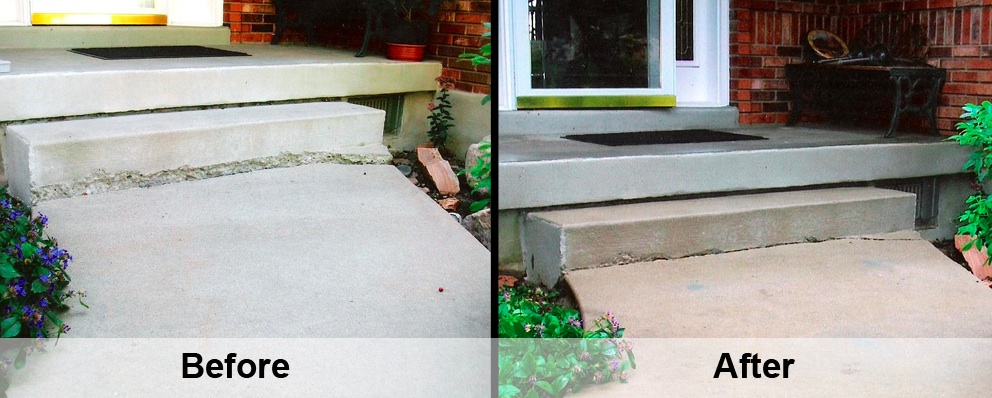
These are commonly found at joints or cracks – any vertical lift or change of greater than a quarter-inch at any joint or crack qualifies as a hazard under ADA rules, and you could be legally liable if someone with a disability is injured as a result of this hazard. Luckily, our concrete leveling services can easily correct these concerns.

Texture

Texture is another important consideration, namely slip-resistant qualities that allow disabled people to walk safely on the sidewalk. Once again, there should be no cracks or unevenness in the concrete, which should be stable and properly finished.

Curb Ramp Considerations

One section of ADA regulations not to overlook is the one on curb ramps, which are required anytime a sidewalk reaches a curb space for an intersection. Curb ramps are especially vital for blind people, who cannot see traffic and must rely on these kinds of physical aides.

Per ADA rules, all curb ramps must be at least 36 inches wide, just like sidewalks. In addition, they must have a slope with a ratio of no greater than 1:12, plus a warming device with a raised dome surface and a color that properly contrasts.

For more on sidewalks and curb ramps, or to learn about any of our concrete raising or leveling services, speak to the pros at Lift-Up Concrete today.

preventing concrete foundation damage

Preventing Concrete Foundation Damage from Forming

There are a number of important concrete areas in nearly all homes or buildings, and one of the single most vital from a structural standpoint will be the foundation. Available in various concrete slab types, concrete foundations are part of the baseline for the entire home’s construction, balance and physical properties.

At Lift-Up Concrete, our concrete lifting and leveling services are often highly valuable for the foundation of your home, business or municipal building. Foundations, like other concrete areas, can be susceptible to cracking, leaking and other forms of damage that can put not only those areas, but the entire building structure itself, at risk. We can also provide valuable expertise on stopping this from happening to begin with – here are several areas where you can be proactive and help limit the risks of foundation damage.

Inspection for Physical Damage

At least once every few months or at minimum twice a year (between changing seasons is always a good time), take a basic walk around the foundation of your home or building and check it for anything that looks unusual. This includes major holes or damage, but also can include smaller hairline cracks or tiny holes that have begun to form in the concrete.

Here’s the thing with these smaller holes and cracks: They won’t stay that way for long. Damaged concrete is just susceptible to being damaged further, as it leaves the interior exposed to the elements. You should also be on the lookout for issues of pest or insect infestation, which can also contribute to deteriorating elements of the foundation and your surrounding structures.

Moisture and Plumbing

These kinds of physical checks are particularly important surrounding storms or other occasions when moisture is present. Water and moisture can cause the expansion and contraction of soil that’s below your foundation, which in turn can put pressure on the concrete itself and lead to the kind of cracks we mentioned above.

Whenever there’s been a recent storm, check your foundation areas for any damage. In addition, during months where you utilize items like sprinklers and hoses, be aware of how your sloping works and ensure water is moving away from the foundation. If upgrades are needed to your drainage system to make sure this is the case, have them handled as soon as possible.

Tree Root Concerns

Tree roots can be issues for several areas of the home, including both main sewer line damage and driveway repair needs in some cases. But they can also impact the foundation – they draw out moisture from the soil, and if they’re too close to foundation areas, they could directly cause the kind of settling we talked about earlier. If you have large trees already on your property near the foundation, consider a root barrier to prevent this concern.

For more on how to protect your home or building’s foundation from cracking or other damage, or to learn about any of our concrete raising services, speak to the pros at Lift-Up Concrete today.

concrete lifting services ROI

How Concrete Lifting Services Provide Great ROI

When it comes to any home project, large or small, one of the primary factors for homeowners is return on investment, or ROI. Any home you buy is an investment in and of itself, as are several areas of improvement or upgrades you make that may impact how much the home is worth if you ever choose to sell.

At Lift-Up Concrete, our ability to provide fantastic ROI within your concrete lifting and leveling needs is one of our top points of pride. Concrete lifting can generally be done for less than half the cost of replacing that same concrete, and usually in just a fraction of the time. Let’s go over a few of the distinct reasons why our concrete services are the way to go if return on investment is a high priority for you.

Prevention of Future Issues

The primary benefit of concrete lifting and leveling, and one that will set the baseline for many of the other benefits discussed here, is the way it prevents future issues with your concrete surfaces. Whether for a walkway, driveway, garage floor, patio or any other area of your home or building, we can address the causes of concrete settling and provide long-term solutions to stop it from happening in the future. We also provide valuable seals to prevent cracks or any kind of unwanted moisture from entering.

If you wait on these kinds of services, on the other hand, your risk of high costs goes up. Smaller concrete issues can lead to larger ones, to the point where you may even be forced to replace the entire slab for a significant cost and hassle.

Lower Future Cost

In many cases, our concrete lifting services will be downright cheap for certain small jobs. Because we don’t have to remove full slabs to work on your issues, we can complete raising projects for even minuscule areas. But as we noted above, if you let these issues simply remain, the chances of them becoming worse and far more expensive in the future is high.

Increasing Property Value

Basements and foundation areas are some of the most important issues for potential homebuyers. If you are considering selling, you want to be able to tell buyers that your basement is waterproofed or that your foundation has recently been leveled and sealed – and to be able to prove this with documentation, which we’re happy to provide.

Safety Concerns

Some of the areas that are related to concrete settling, such as foundation cracks, uneven floors, wet basements and others can all lead to significant safety concerns in any home or building. Ensuring these are taken care of limits any health or injury expenses.

For more on how concrete lifting and leveling services provide great ROI, or to learn about any of our concrete raising services, speak to the pros at Lift-Up Concrete today.

purchasing home concrete foundation issues

Purchasing a Home With Concrete Foundation Issues

If you’re buying a home, there are numerous physical and structural factors you’ll have to consider when it comes to determining if you’re getting a good deal and paying an appropriate price. Everything from outside structures and landscaping to areas like pluming, electrical and air needs are those you should be keeping in mind.

At Lift-Up Concrete, we’re here to tell you about another vital factor to consider when purchasing a new home: The foundation quality. Some of our most valuable concrete lifting and leveling services are applied to home foundations that are experiencing cracks, leaks or other damage, but without our services, these concerns could lead to major structural issues with the home.

So what if a home you’re considering purchasing has foundation issues? Here are some areas to think about before making a decision in either direction.

Are You Prepared?

Just like any other major structural issue, it’s never a good idea to purchase a home with foundation concerns unless you understand the precise scope of those issues and what they might mean. Concrete foundation issues can be stressful and require the right expertise, but they’re not impossible to fix and don’t necessarily have to torpedo your purchase if all the numbers are in the right places. Our next several sections will look at some of the most important areas to ensure you don’t turn a good home deal into a bad one by making the wrong decision on your foundation.

Professional Inspection

For starters, if there’s even a small question about foundation quality, you should involve our professionals. We’re happy to provide free estimates on what a given repair will cost, important information for helping you determine whether this additional expense on top of the home purchase price makes for a worthwhile investment.

In addition, this kind of inspection generally provides great future value. Not only can we tell you how much a given repair will cost, we can also point out signs of long-term issues that may crop up, preventing you from dealing with them later on.

Property Value

Once you have an idea of what the cost of repairs will be, you can assess whether the home purchase is worth it. You can evaluate the housing market in your area, plus look at factors like whether you plan to eventually sell the home, rent it out, or simply retain it.

Timing Concerns

It’s also important to keep track of timing when it comes to foundation repair. During our estimate, we can tell you whether the need for repair is immediate or might be reasonably delayed a few years – this can heavily impact your finances and move-in process in many cases.

For more on identifying foundation issues and assessing them in a home you might purchase, or to learn about any of our concrete lifting and leveling services, speak to the pros at Lift-Up Concrete today.