Category Archives: Blog

signs patio’s concrete repair

Signs Your Patio’s Concrete Requires Repair

As they’re exposed to significant elements on a regular basis (especially those that aren’t covered), patios that utilize concrete won’t last forever. How can you tell when issues are taking place that may require some concrete repair services, however?

At Lift-Up Concrete Lifting, LLC, we’re here to help answer these and numerous other questions for our clients. Patio lifting and leveling services are some of our specialties, and we’ve assisted clients not only with these solutions, but with how to tell when such an approach needs to be applied. What are some of the key signs that your patio’s concrete is in disrepair and could use some attention from our team? Here are several.

Significant Cracking

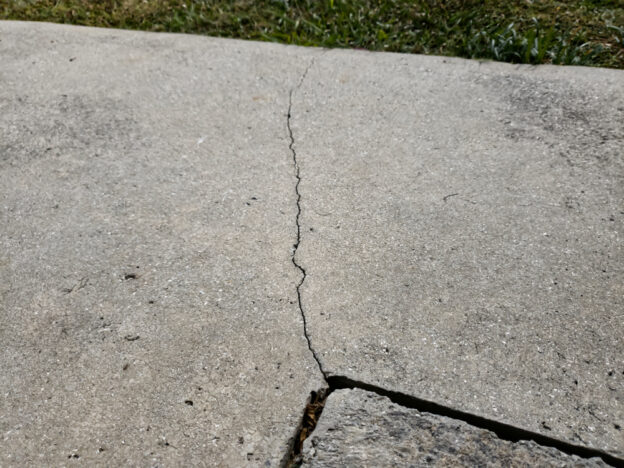
The first sign here is one of the simplest to identify: significant cracking. If the cracks in question are merely surface-level and/or don’t seem to be growing or deepening, then they may not pose an immediate threat. But if the cracks are severe enough that you can see through them in some places, or if you notice them growing and deepening over time, this is definitely a sign that your patio needs some attention.

Spalling or Deterioration

Another common sign that your patio needs repairs is spalling or deterioration. This generally happens when water gets into the concrete and then freezes, causing the concrete to expand and crack. Over time, this can lead to significant deterioration of the concrete itself. If you notice any spalling or deterioration, it’s important to have it addressed as soon as possible.

Spalling, on the other hand, refers to a piece of your concrete actually chipping off and breaking away. This is generally caused by the freeze/thaw cycles we just mentioned, as well as by salt that’s used to melt snow and ice in the winter. Spalling can also be caused by improper installation or poor drainage around your patio.

Pooling Water

There may be a few reasons for pooling water on your concrete patio, and none of them are exactly ideal. First, it could be a sign of poor drainage around your patio. If water isn’t able to drain properly, it will just pool on top of the concrete and cause all sorts of problems over time. Second, pooling water could also be a sign that your patio is sloping too much towards your house (or another structure). This can cause water to pool against your foundation, which is obviously not something you want.

Weathered or Aging Look

Finally, another sign that your patio may need repairs is simply a weathered or aging look. If your patio looks like it’s seen better days, it’s probably because it has! Over time, sunlight and other elements can wear down the surface of your concrete, causing it to lose its luster. If your patio just looks old and worn out, it may be time to consider concrete repair or resurfacing services.

If you’ve noticed any of these signs, it’s definitely time to call in a professional for help. At Lift-Up Concrete Lifting, LLC, we specialize in concrete patio repair and resurfacing services. We can assess the condition of your patio and recommend the best course of action. Contact our team today to learn more or schedule a free consultation!

drainage repair concrete maintenance

Importance of Drainage Repair for Ogden Concrete Maintenance

There are a few surrounding areas or components that will play a major role in the quality of your property’s concrete, and at or near the top of any such list is your structure’s drainage. Moisture is one of the single most common sources of concrete issues, seeping into cracks or other concrete gaps and causing issues due to expansion or contraction — ensuring your drainage system is moving water away from these surfaces is vital for its quality.

At Lift-Up Concrete Lifting, LLC, many of our Ogden concrete lifting and leveling job needs result at least in some part due to moisture damage — including those that result from drainage problems in areas like patios, porches, steps and others that often sit below drainage areas. We also help advise clients on how to avoid these issues in the first place. Particularly during this current spring season, where your drainage system may be recovering from snow buildups or other issues over the summer, it’s vital to both inspect it and make any repairs that are needed (whether on your own or with professional assistance). Here are some reasons why this is important.

Preventing Home Water Damage

The first issue we’ll point out here with regard to damaged or improper drainage is one that impacts not just concrete, but also the rest of your home: water damage. While many people are familiar with the potential for water to cause issues inside the home, it’s vital to remember that any surface of your property that sits below a drainage point is at risk for serious water damage — and this includes your basement or crawlspace, as well as any outdoor patios, steps or other concrete surfaces.

To avoid these issues, it’s important to ensure that all of your drainage systems are clear and in good repair before the spring season (or any time of year with significant precipitation). This means making sure gutters and downspouts are clean and able to move water away from your home as needed, in addition to ensuring that any outdoor drains are unblocked and in good working order. Doing this can prevent extensive water damage to both your home’s interior and exterior — as well as the concrete surfaces that sit below these drainage points.

Foundation Damage

Your home’s foundation is one of the single most important aspects of its structure, and even a small amount of water damage can cause serious foundation issues. That’s why it’s critical to ensure that all drainage systems surrounding your home are in good working order, as any leaks or blockages could result in water seeping into your home’s foundation (or the soil around it) and causing major problems.

In many cases, foundation issues arise simultaneously with others like concrete garage floor cracks or patio cracks; this is because the water that causes these issues often comes from the same source. As such, fixing drainage problems as soon as they’re discovered can often prevent a host of other serious concrete issues from arising.

Sinking Concrete Surfaces

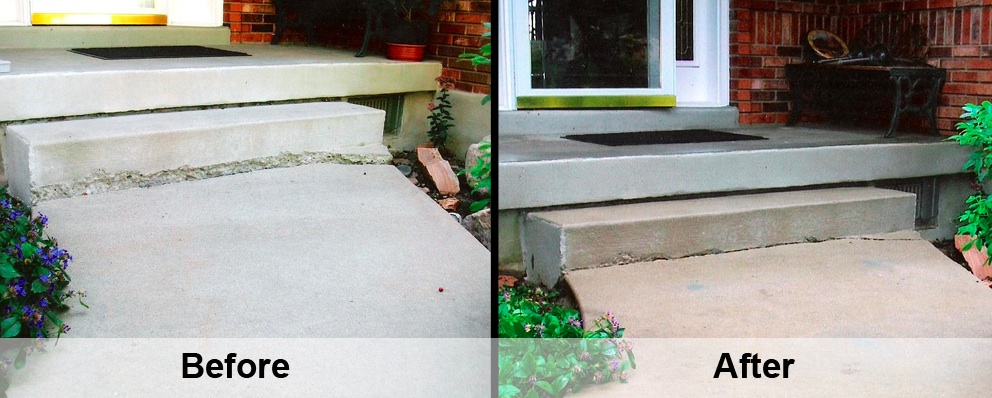
Another common issue that can arise from damaged or improper drainage is sinking concrete — an all-too-frequent problem with outdoor concrete surfaces like patios, steps and sidewalks. While this can often be caused by soil erosion (another potential issue that can arise from improper drainage), it’s also frequently the result of water seeping into these concrete surfaces and causing them to heave or sink.

Preventing these issues often comes down to ensuring that all drainage systems are in good working order, as this can help prevent water from seeping into these surfaces and causing them damage. In some cases, however, it may also be necessary to have these surfaces repaired or replaced if they’ve already been damaged by water.

Steps and Tips for Drainage Maintenance or Repair

Especially if you’ve had concrete damage or related issues in the past, but even if you haven’t, here are some important themes to consider for both inspecting and repairing your drainage system:

  • Simple, safe inspection: Whether you do this on your own or hire a professional, it’s important to inspect all aspects of your drainage system (including gutters, downspouts, outdoor drains and any other potential problem areas) at least once per year. This helps ensure that any issues are discovered and fixed as soon as possible, before they have a chance to cause extensive damage.
  • Regular gutter and downspout cleaning: One of the most important aspects of maintaining your drainage system is keeping gutters and downspouts clean, as this helps ensure that they’re able to move water away from your home as needed. This is especially important in the fall, when leaves and other debris can clog these drainage points and prevent them from working properly.
  • Proactive repair: If you do notice any issues with your drainage system, it’s important to have them fixed as soon as possible. In many cases, small repairs (like clearing a blocked gutter or downspout) can be done on your own; however, more significant issues (like a cracked foundation or a heaving patio) will likely require the help of a professional.
  • Don’t wait to address drainage issues: As with most concrete problems, it’s important to address drainage issues as soon as they’re discovered. The longer you wait to fix these problems, the greater the chance that they’ll cause serious (and expensive) damage to your home.

The importance of drainage repair for concrete maintenance cannot be understated. Moisture is one of the single most common sources of concrete issues, seeping into cracks or other concrete gaps and causing issues due to expansion or contraction — ensuring your drainage system is moving water away from these surfaces is vital for its quality.

For more on this, or to learn about any of our concrete repair services in Ogden or nearby areas, speak to the team at Lift-Up Concrete Lifting, LLC today.
spring concrete driveway repairs

Why Spring is Popular for Concrete Driveway Repairs

Certain areas of concrete repair tend to see higher demand during various seasons in a place like Utah, and a good example here is the driveway. While driveway concrete repair needs can certainly come about at any time of year, perhaps their most common season — and definitely the one where we cover the most concrete repair jobs on driveways — is the spring.

At Lift-Up Concrete Lifting, LLC, we’re happy to offer the best driveway lifting and leveling services available in any part of Utah. What can happen to concrete during the winter period, and why is spring often a time when concrete repair needs arise as a result? Here’s a primer for you to understand.

Winter and Driveway Concrete

Winter is typically the most stressful season when it comes to concrete. It’s not that concrete can’t handle cold weather — it certainly can, and in fact most concrete is designed to withstand quite low temperatures. Rather, the problem is that water can get into tiny cracks in the concrete, freeze, and then expand as it turns to ice.

This process can cause hairline cracks to become larger, and also helps to create new ones. Water can also pool on top of concrete and then freeze, causing the formation of what are called “frost heaves.” You might not think that a little bit of water could cause such havoc, but when it freezes it can create some serious issues.

The good news is that this process happens gradually, so you often have time to address driveway concrete repair needs before they become too severe. In the spring, the weather is starting to warm up and the ice and snow are starting to melt, so this is often a time when we see an uptick in repair jobs.

Other Erosion and Weathering

Here are some related issues that may crop up in your concrete driveway over the winter:

  • Erosion and groundwater: If you live in an area with a lot of rainfall, or if your driveway is on the lower side of a hill, you may find that it’s subject to more erosion than average. This can cause cracks and other damage over time as water washes away dirt and other materials that help to support the concrete.
  • Heavy weight loads: If you have a lot of heavy traffic — for example, if you’re a business with a lot of delivery trucks coming and going — this can cause concrete to wear down more quickly.
  • Salt: If your driveway is near a road that’s treated with salt in the winter, this can cause the concrete to deteriorate over time.

Quality Repair Services

If you’ve come out of the long winter and have noticed some issues with your driveway, don’t hesitate to reach out to the pros at Lift-Up Concrete Lifting. We’ll be happy to assess the damage and provide a repair solution that will have your driveway looking as good as new in no time. Contact us today for a free quote!

For more on this or any of our concrete lifting and leveling services, speak to the team at Lift-Up Concrete Lifting, LLC today.
deciding concrete repair replacement

Deciding Between SLC Concrete Repair and Replacement

The decision between whether to repair or replace failing structures or components is a regular one for home and building owners, and concrete damage is a good example. Those looking for an improved concrete surface on any part of their property will often be wondering whether the most cost-effective way to achieve this is through basic repairs or a replacement of the entire slab area.

At Lift-Up Concrete Lifting, LLC, we’re here to offer quality residential, commercial and even municipal concrete lifting and leveling services in numerous property areas around Salt Lake City and other parts of Utah, from driveways and garage floors to patio leveling and many other options. While there are some situations where damage will be so significant to a concrete surface that replacement is the only option, we often identify situations where property owners thought they’d be forced to replace their slab — but in reality, will do better (and spend less) with our concrete repair solutions. Here’s a primer on how to choose between these two, plus what’s important to keep in mind as you move through this process.

Damaged Concrete Won’t Magically Fix Itself

First and foremost, before we get into concrete repair versus concrete replacement, an important note that relates to both potential areas: When concrete damage is spotted, it won’t just go away or fix itself. In fact, this is one of the most common mistakes we see people making when they notice cracks, pitting, spalling or other types of damage to their concrete surfaces.

Too many property owners believe that all they need to do is wait for time to pass and/or the weather to change — but this isn’t the case at all. Left untreated, concrete damage will only get worse over time. What might start as a small issue can quickly turn into a much bigger and more expensive problem if ignored.

In fact, this is one of the key themes we message to customers we work with, and part of why our repair services are so robust. Many issues that might require concrete replacement if they’re left too long can be easily remedied with affordable repairs as long as they’re addressed in a timely manner.

Re-Leveling Versus Re-Pouring

While there are other forms of both concrete repair and replacement, these are two common processes within each realm — and comparing them is an interesting way of getting a gauge on what each means. Here are some basic variables to stack up next to one an other:

  • Cost: When it comes to up-front cost, concrete re-leveling is far more affordable than replacement in most cases. In fact, we often tell customers that they can expect to spend 1/5 to 1/10 as much on concrete re-leveling versus replacement.
  • Timing: Concrete repair can be completed quickly and does not require the same waiting time that replacement does.
  • Appearance: Concrete re-leveling will often result in a surface that looks very similar to the original concrete. Concrete replacement will result in a completely new surface.
  • Cleanup and waste removal: Concrete replacement will result in a fair amount of waste that needs to be removed from the worksite. This is not the case with concrete re-leveling.

As you can see, there are some clear differences between these two approaches — and they should help you better understand when each might be more appropriate.

Curb Appeal

Curb appeal is a vital concern for many property owners, as it’s a major factor in keeping property value high. This is one area where modern technology has changed the game: Even a decade ago, concrete replacement was significantly more desirable when it came to curb appeal — but today’s quality concrete repair techniques have changed this reality.

Instead, it’s possible today to get concrete repairs that look just as good as a replacement, and in some cases even better. So if curb appeal is a key concern for you, make sure to keep this in mind when considering repair versus replacement. Many are willing to spend a bit more on concrete replacement if it looks better — but if you can get that same aesthetic without the higher cost, it’s a no-brainer.

Situations Where Replacement is Unavoidable

Now, even as concrete repair specialists, we recognize that there are situations where repairs aren’t realistic for a given concrete surface. And because we care most about our clients getting the very best for their needs, we’ll never attempt repairs when it’s obvious that replacement is what’s needed.

A few such situations include:

  • Major damage: If a concrete surface has suffered extensive damage, it might not be able to be repaired. Depending on the depth and severity of the damage, this could make repairs a risky proposition. For instance, if the concrete has large cracks that go all the way down to the rebar, it’s probably not a good candidate for repair.
  • Multiple issues: If a concrete surface has several different types of damage, it might be best to replace it. This is often the case with surfaces that have both cosmetic and structural damage.
  • Customer desire: In other cases, damage itself will not be the primary reason for replacement — rather, it will be customer preference. For instance, some customers might not like the appearance of repaired concrete, or they might want a completely new surface.

In these and other cases, replacement is often the best solution. But remember that this doesn’t mean that repair is never an option — it just means that there are some cases where it doesn’t make sense.

For more on how to choose between concrete repair and replacement for your SLC property, or to learn about any of our concrete lifting and leveling services, speak to the team at Lift-Up Concrete Lifting, LLC today.
road salt concrete winter

Preventing Road Salt Damage to Utah Concrete in Winter

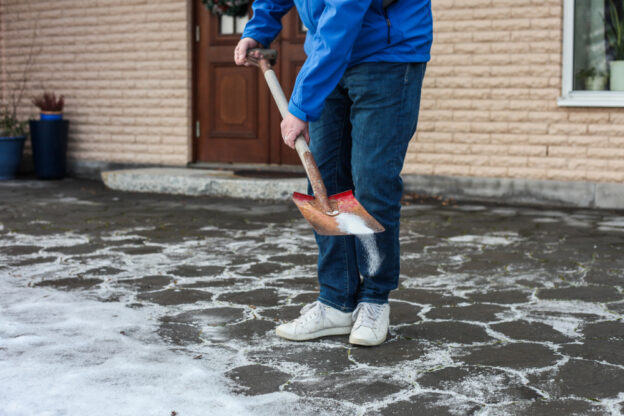
There are a few potential threats to your concrete that only show up at certain times of year, and a good example in a place like Utah is road salt. Road salt is only used during the winter, to help remove icy patches and make roads safer, but it’s possible that during these periods, salt can impact your concrete surfaces.

At Lift-Up Concrete Lifting LLC, we’re happy to offer a wide range of commercial and residential concrete lifting and leveling services for clients throughout Utah. Our clients’ needs for concrete repair can vary widely, including cases where road salt has contributed to damage that’s taken place. How can this happen, and how can you be sure your concrete surfaces are protected this season? Here’s a primer.

How Salt Can Damage Concrete

As you may know, concrete is a porous material that absorbs water quite easily. However, it’s often not the actual moisture that causes damage within your concrete slabs — rather, it tends to be the presence of what are known as deicers, or small non-liquid pieces that cause the actual deterioration. And in some cases, salt can serve as a deicer for your concrete slab.

This happens when chemicals in concrete react with the salt. Specifically, calcium hydroxide that’s found in concrete reacts with calcium chloride in salt, which leads to internal cracks and a breakdown of the concrete. When it comes to a potentially damaging substance like salt, being proactive is one way to help protect your concrete from harm this winter.

Quality Concrete is More Resistant

Luckily, concrete surfaces that have been created or repaired in high-quality ways will resist damage from winter road salts. One method here involves sealing the concrete, which can be done in a few ways.

This isn’t always even necessary, though. As long as you’re paying attention to any concrete damage and maintaining quality concrete repairs, you’ll avoid opportunities for salt to get in and cause problems. As long as you maintain quality concrete repairs, you should be fine to use salt on your property this winter without worrying about damage . However, if any signs of cracking or deterioration start appearing on the surface of your property, it’s a good idea to get them treated before the problem gets out of hand.

Repairing Salt-Related Damage

And if you’re in a situation where salt-related chemical reactions have already caused significant cracking or other damage to your concrete, don’t panic — our team is here to help. We’ll provide a thorough evaluation of the situation and let you know what repairs are necessary. Often times, these types of repairs can be completed without needing to replace large sections of your concrete surface — which saves you a lot of money in the long run!

For more on protecting your concrete from road salt, or to learn about any of our concrete lifting and leveling services throughout Utah, speak to the staff at Lift-Up Concrete Lifting, LLC today.

common myths concrete repair

Debunking Common Myths on Concrete Repair

Like with any other product or service that becomes popular and widely used, there are a few unfortunate myths that have sprung up in recent years regarding concrete lifting, leveling and other forms of repair. While these might not be too harmful in some settings, there are others where these forms of misinformation cause home or property owners to take the incorrect action with their concrete, possibly leading to costly damage and related issues.

At Lift-Up Concrete Lifting, LLC, we’re happy to offer a wide range of concrete repair services, including for areas like driveways, walkways, porches, garage floors and many others. We’ve heard all the most common myths about our services, and we’re here to set clients straight in these areas so they have the proper information in any area they might require. What are some of the most pervasive myths out there about concrete lifting and leveling? Here are a few, thoroughly debunked.

Concrete Repair is Cosmetic Only

For some reason, there are those who believe that the only reason someone would need concrete repair is for aesthetic purposes. This couldn’t be further from the truth. While it’s true that a properly repaired and restored surface will look better than one that has not been tended to, there are also many practical reasons behind using us as well.

For instance, an improperly lifted or level area of concrete can actually cause problems like injury, damage to other surfaces or objects, and water pooling. There are also instances where the home or building owner might need their concrete raised for functional reasons, like in order to install pipes or wires under an area that has seen concrete repair performed.

In addition, vehicle damage is a possibility for concrete surfaces that have not been repaired or inspected in a timely manner. Our professionals are highly trained in making visual inspections of any area that might be in need of repair, so homeowners can rest easy about the safety and quality of their concrete surfaces when they choose us to help them.

Concrete Repair Requires Days or Weeks to Complete

Some also are under the mistaken impression that concrete repair is a major, days-long project where we must jackhammer the surface of existing concrete and replace it with fresh material. This is another myth that couldn’t be further from the truth.

In actuality, all of Lift-Up Concrete Lifting, LLC’s services come with a quick turnaround time so your project can be completed as soon as possible. Our team has developed an innovative system in order to complete all projects in a timely manner, so whether it’s garage floor repair or driveway leveling, we can help your household.

And best of all, there’s no need for any homeowner to temporarily leave their home or building while we perform our services. We’re happy to take care of your project as quickly as we can so you can get back to enjoying your home sooner rather than later!

Concrete Repair Isn’t Worth the Cost

While no one is necessarily scoffing at the cost of concrete repairs, which will vary based on the size of the surface and the issues it’s experiencing, the reality is that they pale in comparison to the alternative cost of replacing that same slab of concrete. For example, if a household or business is experiencing water pooling issues that might be due to uneven concrete surfaces, the alternatives would include such things as new landscaping and grading on the property. These services will often cost far more than simply hiring our team for a quick and effective leveling solution.

In many ways, concrete lifting and leveling is a form of investment. You’re investing in the functionality, safety and attractiveness of your home or business. In the long run, this is a smart move that will pay off in terms of reduced expenses related to concrete repair and replacement in the future.

Concrete Repair Ruins the Yard

We’re not even sure where this myth came from, but we’ve absolutely heard from clients who have put off concrete repairs in the past under the heavily mistaken assumption that such services would be harmful to the appearance of their yard, driveway or other surfaces. It’s true that any time work is done on a home or business property there will be some necessary disruption for residents and visitors, but in the case of concrete repair services, this usually amounts to no more than several hours with heavy machinery on location.

And when we’re finished, your yard and other property areas are unchanged from their previous state. All of our equipment is highly durable and designed to leave as little of a footprint on your property, driveway or other surfaces as possible. In fact, many homeowners are surprised to learn that we actually have a “leave no trace” policy where we take all necessary steps to ensure there is no damage done on the surface after we’ve worked on it.

Anyone Can Perform Concrete Repairs

Lastly, one of the single most harmful and unsafe myths we’ve encountered during our time in this field is the notion that anyone can perform concrete repairs. While we’ve heard many people say they would be happy to “give it a shot” and try their hand at doing some concrete lifting and leveling services, we strongly disagree with this course of action for several key reasons.

Firstly, not everyone has the right kind of equipment or safety training to perform this type of work. Not only is it necessary to have the right equipment, but you’ll also need to know how to operate it properly in order to get the best results and ensure your own safety while doing so.

Secondly, even if you did possess all of these things, concrete repair can be a very dangerous job if you don’t know what you’re doing. Not only is the equipment heavy and difficult to operate, but there’s also a risk of injury from falling debris as well as electric shock when it comes to working with cutting tools and other equipment.

Our team has invested heavily in all of the proper training, and we’ll handle these jobs for you. To learn more about any of our concrete lifting and leveling services throughout Utah, speak to our staff at Lift-Up Concrete Lifting, LLC today.

concrete leveling improves property value

How Concrete Leveling Improves Property Value

Whether you’re thinking of selling your property in the near future or just are always looking for ways to keep value high, there are a number of areas you might consider with regard to property value. One of these, especially if your property contains a number of concrete surfaces, is concrete leveling and other forms of basic concrete repair.

At Lift-Up Concrete Lifting, LLC, we’re proud to offer a wide range of concrete lifting and leveling services, including for surfaces like walkways, driveways, patios and many others. Focusing specifically on concrete leveling, which refers to repairing low spots in concrete and creating a clean, level surface, what are some of the ways this process improves property value? Here are a few to be aware of.

Decreasing Hazards

Whether for a residential or commercial property, concrete leveling is one of the best ways to improve safety. If your concrete surface has begun to sink or crack, you and others might be at risk for tripping and falling, which could lead to injuries both severe enough for medical treatment and small enough that they don’t require outside help.

By repairing low sections of sunken or cracked concrete, in addition to leveling areas that have a slope, you’re not only creating a more even surface but also one that’s closer to being flat. This decreases the chances of injuries like these, which means you might save yourself some medical bills and lawsuits.

Increasing Curb Appeal

Even if you don’t think about it often, when people come to visit your property, the first thing they’ll see is the concrete. This includes both concrete surfaces you might consider “foreground” items, like walkways and front steps, as well as those that are more subtle, such as sloped patios.

When visitors are greeted by a cracked or uneven surface, it might make them question the overall safety of your property, as well as how strong your commitment to maintaining a presentable exterior is. However, when concrete surfaces are even and smooth with no cracks or damage, it makes for an excellent first impression and shows visitors they’ll be safe and comfortable on your property.

This can subtly influence their opinion of you, whether that means they’ll feel more or less inclined to purchase your home or do business with you in some other way.

Decreasing Maintenance Requirements

As mentioned earlier, concrete leveling isn’t just about creating a smooth surface, it’s also about maintaining one. Remaining on the forefront of safety and appearance is exactly why so many people call Lift-Up Concrete Lifting, LLC to handle their cracking and uneven concrete services.

As opposed to letting your property sink or crack even further over time, having one of our professional technicians come out to handle damage like this can improve how high your property value stands. It also means you might not have as many safety concerns to worry about and your surfaces will remain as aesthetically pleasing as possible.

For more on the ways concrete leveling improves property value, or to learn about any of our concrete lifting and leveling services throughout Utah, speak to the staff at Lift-Up Concrete Lifting, LLC today.
qualities concrete repair partner

Qualities to Look for in a SLC Concrete Repair Partner

If your property’s concrete is in disrepair and requires attention, finding a high-quality partner for this job is of paramount importance. An excellent concrete repair specialist will resolve your issues quickly and without any unexpected costs or hassle; on the flip side, there are lower-quality concrete repair companies out there who simply don’t offer the same level of service, and you’re risking both your time and money if you work with them.

At Lift-Up Concrete Lifting, LLC, we’re proud to serve as Salt Lake City’s top provider of residential, commercial and even municipal concrete lifting and leveling services. We’re also happy to see our services compared to other concrete repair companies in the area — both because we want clients to get the very best, and also because we’re supremely confident that your research will lead you to us as the ideal company to provide it. When performing this sort of research, here are some of the top qualities you should be looking for in any concrete repair specialist.

Full Licensure and Insurance

Before proceeding any further with a prospective concrete repair specialist, make sure that they’re fully licensed and insured for the work you need done. A company that’s unwilling to provide this information isn’t a serious one, and thus shouldn’t be considered for service.

At Lift-Up Concrete Lifting, LLC, we take great pride in our full licensure and insurance coverage at all times. We’re a fully licensed, bonded and insured company with the ability to perform a wide range of services, including concrete leveling and crack suppression.

Services and Area Coverage

In addition, before moving on to other important areas, be sure to check that a partner you’re considering provides the precise services you require. If you need concrete resurfacing, for instance, it’s of little use to select a company that mainly performs concrete lifting and leveling work; they simply wouldn’t have the necessary equipment or expertise to do the job right.

On top of this, just confirm that services are provided to your area. If your property is located outside of the Salt Lake City limits, for example, there’s no point in hiring a company based within city limits; they simply wouldn’t be able to provide you with the assistance you need.

Quality Reviews and Reputation

Like any other service you’re considering from a third party, you should never leave yourself at the mercy of a company’s word that they’re good at their job. Instead, you should always check for reviews and feedback left by others who’ve used them in the past.

By browsing review sites like Yelp, Angie’s List or even Google+, you’ll be able to quickly and easily weed out any companies that simply don’t offer good service. Even if a company has positive reviews on these sites, though, it doesn’t automatically mean that you should choose them over another — always check for any negative reviews as well, because they can reveal important insight into problems people have had with your prospective partner.

In addition, consider the use of word-of-mouth through any friends or family you may know living in the area. A good concrete repair specialist will have a long list of clients willing to vouch for them, and you can benefit from their experiences by asking around.

Transparency

If you get far enough with a prospective concrete repair company to begin discussing prices and services, a primary theme that should be present throughout is transparency. Any company that’s not willing to openly discuss the exact nature of their services or prices isn’t a good one, and you should simply move on, no matter how attractive the low price may be.

Areas that should be discussed include precise pricing, warranties, money-back guarantees and more. A good concrete repair specialist will explain the pricing structure in full detail up front, so you don’t have to worry about significant hidden fees or any other unpleasant surprises. They will also provide a written estimate that is clear and explicit in detail.

In addition, the company should be able to show examples of past work performed. This will allow you to see the quality of their work, and determine if it’s what you’re looking for. If they can’t provide any references or examples of their work, simply move on to another company — there are many out there that do, so finding one should be easy enough.

Proactive Communication

Even during your evaluation phase, you’ll be able to get a strong idea of which concrete repair companies or specialists are most responsive and proactive in communication. While availability is certainly a key aspect to look for, responsiveness and proactive communication are much more useful because they transcend the initial meeting and carry on throughout the entire work process.

If one company or specialist takes days or even weeks to get back to you after your initial discussion, you can be sure that their follow-up and general communication skills are equally poor. On the other hand, good companies will be quick to respond via phone, email or text message with any questions you may have.

Respect and Friendliness

Finally, no one wants to deal with high-pressure salespeople, or any company that doesn’t treat them with respect. During your initial evaluation process, you should never be spoken to in a demeaning tone, nor should you feel intimidated in any way.

If you get the impression that one concrete company or specialist is trying to take advantage of you in some way, simply move on to someone else. You should never have to deal with any form of coercion whatsoever, because you’re the one who will be footing the bill.

For more on how to find the ideal concrete repair specialist, or to learn about any of our quality concrete lifting and leveling services in SLC or nearby areas, speak to the staff at Lift-Up Concrete Lifting, LLC today.

avoiding damage concrete winter

Avoiding Damage to Ogden Concrete Poured in Winter

The chemical reactions that take place when concrete is poured require a few basic conditions, and temperature is part of this equation. The ideal temperature for pouring concrete is between 50 and 60 degrees Fahrenheit — but what if you’re considering ordering a concrete pouring job in significantly colder temperatures than this?

At Lift-Up Concrete Lifting, LLC, we’re happy to offer a wide range of commercial and residential concrete lifting and leveling services in Ogden and other parts of Utah — and many of our concrete repair jobs are necessitated by poor concrete pouring, sometimes due to improper understanding of how concrete works in cold temperatures. Can concrete be poured in cold temperatures (yes), and which important precautions should your concrete installer be taking if you’ve ordered concrete pouring during the upcoming winter so you avoid any future issues? Here’s a primer.

Can Concrete Be Poured in Cold Weather

Generally speaking, the answer here is yes — with the right precautions. When concrete is poured, it needs time for chemical reactions to take place within the solution, allowing it to set and strengthen; the colder it is, the slower these chemical reactions will take place. If it’s too cold, the concrete can become brittle and more prone to cracking after it dries.

So if you’re considering ordering a concrete pour in below-freezing weather, there are a few key things you need to keep in mind. We’ll go over them in our subsequent sections.

Know Strength Requirements

Any concrete installer you’re working with should know how to determine any specific strength requirements for your cold weather pour. If the concrete isn’t going to be exposed to freezing temperatures, it doesn’t need to have as high of a strength rating as if it will be in an environment where it could potentially freeze. Work with your installer to ensure that they understand the specific needs of your project.

Prevent Freezing Before, During, and After

In addition, there are several ways your installer should be preventing freezing during the pouring process. One common method: By using hot water during the mix, they can keep the temperature of the concrete up so that it doesn’t freeze. Be sure they’re only mixing the amount of water they need otherwise you’ll be left with weak concrete — another one of our tips below will offer more on this topic. By using steam or dry heating, your contractor can also prevent freezing in colder weather.

Adequate Forms and Erosion Control

If you’re thinking about ordering cold weather concrete pouring, one thing to keep in mind is the forms used. If your contractor isn’t using adequate forms or erosion control to prevent water from getting into your pour, freezing could cause damage. Be sure to look over the job site yourself before allowing a pour so you can catch any potential issues.

And finally, be sure to have adequate insulation in place if you’re expecting the concrete to take more time to cure in cold weather. If you’re unsure about what kind of insulation is necessary for your project, be sure to consult with your contractor.

For more on how to avoid concrete issues when it’s being poured in the winter, or to learn about any of our concrete repair services throughout Ogden, speak to the pros at Lift-Up Concrete Lifting, LLC today.

signs concrete installer pour issues

Signs Your Concrete Installer Has Pour Issues

Whether you’re a homeowner with several important concrete surfaces or the owner or manager of any commercial or municipal property with common concrete needs, quality concrete pouring for your surfaces is an important consideration. Many facilities will need concrete poured frequently, often more than once per year, and ensuring you have a good partner for this job is vital.

At Lift-Up Concrete Lifting, LLC, we’re not a concrete pourer per se — but as your top resource for commercial and municipal concrete lifting and leveling services, we’ve seen numerous examples of what happens if your concrete pour isn’t done well. We’re the ones who are typically called to repair damage that takes place due to poor concrete pouring, which may lead to a few different concerns. Here are a few of the most common signs that your concrete pour was not done well — signs that should not only necessitate a call to our team for repairs, but also should make you consider changing your concrete installer for future jobs.

Concrete Cracking

Concrete may crack for a few different reasons, from settling to changing weather patterns. Cracks in concrete may be small and only a few inches long, or they may be wide enough to form caverns that are several feet deep. Small cracks that are just at the surface will typically not cause problems, but if large cracks develop throughout the expanse of your poured concrete, these will only get worse with time. If you see cracks, consider asking your installer what’s causing them so you can assess if they have taken any safety precautions or are planning to take any safety precautions in future installations.

If your concrete is being installed near an older structure, it may crack due to temperature changes that affect both structures differently. Sometimes, this type of crack occurs without being noticed for some time. You can ask your installer if they pulled a permit with the city where you live to ensure that the contractor is aware of temperature-related cracking issues.

If you’ve noticed cracking in your concrete within a few weeks after installation on more than one occasion, however, it might soon be time to consider a new installer. One incident of concrete cracking can be explained away for other reasons; multiple such incidents means that the installer is not taking the necessary precautions to ensure a good pour.

Concrete Honeycombing

Honeycombing refers to an issue where pockets of air have been left in the concrete mixture, and these pockets expand as the concrete dries. This leaves a weak spot in the concrete, and over time this area will usually crumble. The honeycombing is often difficult to see with the naked eye, but it can often be felt if you run your hand over the surface of the concrete.

In some cases, honeycombing can be repaired by filling in the pockets with a mortar or concrete mixture. This, however, is typically not a long-term solution, and the honeycombing will usually recur.

If you’re seeing significant honeycombing after your concrete pour, it’s likely that the installer did not take the time to properly mix the concrete or did not use the correct materials. In severe cases, honeycombing can cause the concrete to crumble and even fall apart. If this is the case, it’s time to call in a professional.

And with your next call, you should likely be considering a new concrete installer for your future needs. Honeycombing is a simple issue that any reputable installer should be able to avoid — if they can’t, there’s a good chance they’re not installing your concrete correctly.

Concrete Delamination

Another possible concrete issue is known as delamination, which refers to a case where the concrete was poured too thin — leading to the aggregate, which makes up the majority of the body of the concrete, separating from its cement paste. While delamination can also be caused by temperature-related issues, it’s often the result of poor pouring. It will result in an uneven, bumpy surface, and it will chip easily as well.

Once again, delamination is a concrete issue that you won’t notice right away. In fact, some homeowners may not even realize that the problem exists until they start seeing cracks in the concrete themselves or observe rust forming on rebar thanks to oxidation.

If you notice either of these issues occurring with your concrete, it may be time to ask your current installer for a quote on additional work. If they’re unable to fix the issue or have not taken necessary precautions to avoid issues in the first place, it might be time to find a new concrete contractor.

Concrete Spalling

Finally, an issue known as spalling may take place to some new concrete surfaces. This involves the appearance of what looks like blisters or open sores on the surface of the concrete. These spots will be dry and flaky, and they can often start to crumble and fall off.

Spalling is often the result of a chemical reaction that takes place when the wrong type of aggregate or cement is used in the mixture. If this is the case with your concrete, it’s likely that the installer did not take the time to do any pre-testing on the site where the concrete was being poured.

In severe cases, spalling can cause pieces of concrete to break away from the surface and even fall off. If this is happening with your new concrete installation, it’s time to call in a professional — and time to consider who you’re using for your concrete pouring in the future.

For more on the signs that you’re working with a concrete installer who has pour issues, or to learn about any of our concrete repair services throughout Utah, speak to the staff at Lift-Up Concrete Lifting, LLC today.