Category Archives: Blog

leveling concrete before winter

Why Leveling Concrete is Important Before Winter Hits

The changing seasons can have an impact on the quality of your concrete, and perhaps the most significant seasonal transition here is the move into the colder winter period. Because of the way moisture freezes and thaws during this time of year, causing it to expand and contract within areas like your concrete, the winter is one where concrete surfaces must be protected to ensure their long-term quality.

At Lift-Up Concrete Lifting LLC, we’re happy to provide a wide range of concrete repair services, ranging from driveway lifting and leveling to numerous other areas of your property. We’ve assisted a number of clients with their concrete leveling needs, including those who are looking to get this job done before the winter and its accompanying snowfall hits Utah. What are the risks posed to your concrete surfaces during the winter, and why is leveling your surface so important in many of these situations? Here’s a general primer.

The Risks Winter Poses to Your Concrete

As we noted above, winter is likely the most stressful season of the year when it comes to your concrete. The freezing and thawing of moisture creates expansion and contraction, respectively, and this can cause an incredible amount of pressure on your concrete surfaces. It’s one reason so many people damage their driveway during the winter – they’re not protecting their surface from these risks.

As if that wasn’t enough, you also have to worry about the effects of snow and ice. When these elements are allowed to sit atop your concrete for an extended period, they’ll likely begin to join together, including at seams where different pieces of concrete meet each other. Once this happens, you can expect that water will be able to seep into your concrete and start causing damage that might require us to do expensive concrete replacement.

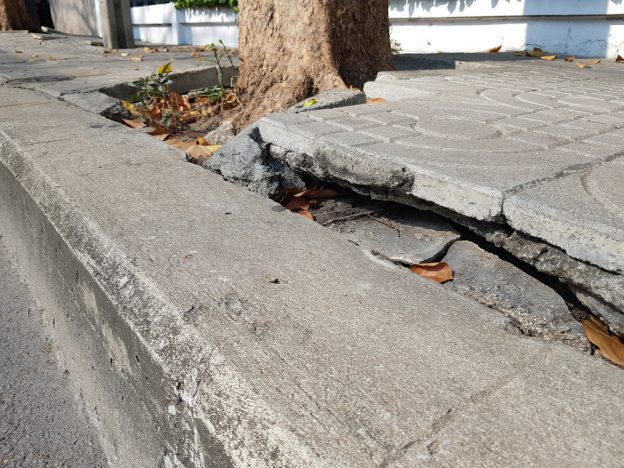
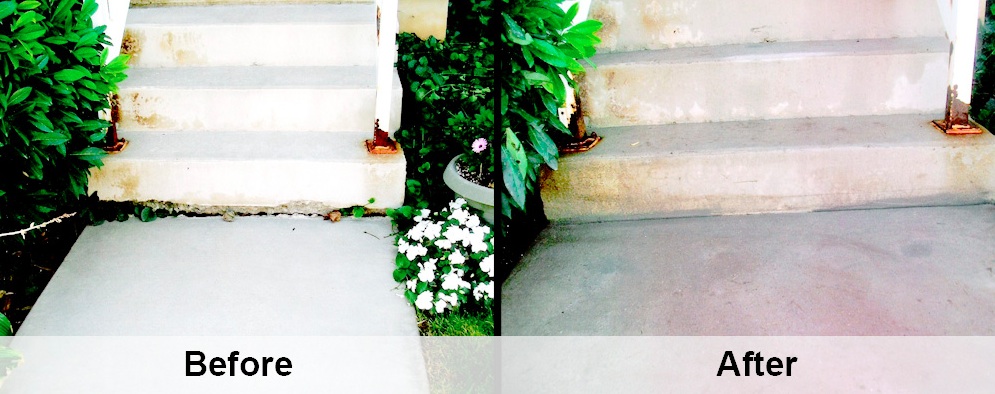
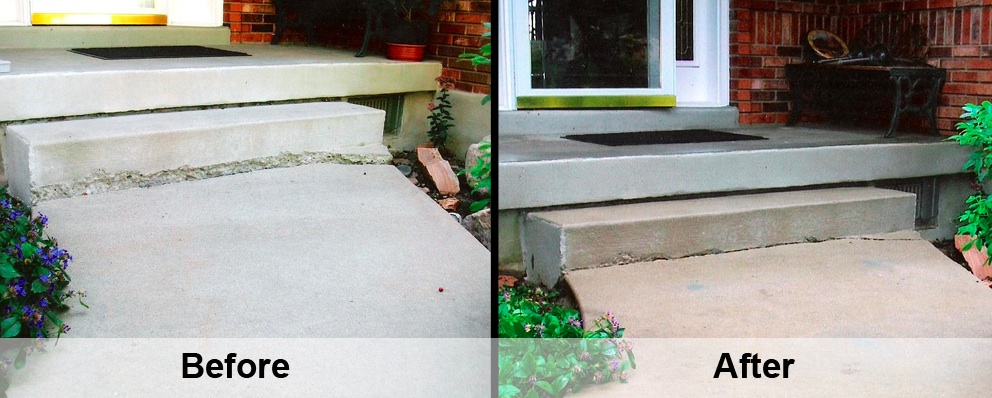
Depending on the type of damage your concrete is experiencing, there may be a few solutions you consider. These include several forms of concrete repair, but in many cases, the primary need for your surface will actually be leveling solutions that can help to keep your concrete even and safe. After all, if you’ve got dips or areas of uneven height in your surface, you’re inviting damage that can destroy the long-term strength and integrity of your concrete.

Our next few sections will go over the reasons why leveling is so often carried out before the cold weather hits.

Avoiding Major Hazards

One of the key risks of concrete surfaces that are uneven is that they can easily create hazards for vehicles, pedestrians and other people who are on your property. A surface with too many high spots or dips will make it nearly impossible for car tires to drive across without losing traction or getting stuck in the holes created by uneven surfaces. Similarly, if you have an area of your driveway that’s particularly low, elderly or young people may have trouble getting into or out of vehicles that are parked there.

And during the winter, when these kinds of level obstructions often can’t be seen easily due to snow or ice, the chances of someone creating an accident by driving across your property increases significantly. Preventing these kinds of accidents can be very important, even if they are only likely to occur during the winter.

One way to avoid this is through taking steps to ensure your concrete surface has been leveled before any winter precipitation hits it. By doing this, you can keep your family safe from injuries during the upcoming months while also protecting your concrete surface from any damage it might sustain if there’s ice or another form of precipitation.

In addition, you’re preventing any risk of liability if someone else is injured on your property due to these hazards.

Snow-Blowing Becomes More Difficult

Have you ever tried running a standard snow-blower across a surface that’s heavily uneven and covered in chunks of ice? The outcome is probably very similar to what you’d see if someone decided to run across your uneven concrete that way – it’s nearly impossible. In fact, the only option when attempting that would be to find a different method for removing snow from your surface or even trying to plow it away manually yourself.

This is another reason why leveling your concrete before winter is important. When your surface has major cracks or other forms of obstruction in it, you can’t use a standard snow-blower to clear the obstructed areas because these machines are designed for working across even surfaces. You risk damaging both the machine itself and your surface.

Winter Worsens Leveling Issues

Finally, if you allow major leveling concerns on any concrete surface to persist until the winter, you can expect to see things get much worse. The freezing and thawing process that goes on in colder weather will cause any cracks or dips in your surface to expand further than they might in summer, leading to more severe cracking that makes damage even more likely.

If you keep just a few inches of snow accumulated on your level concrete, this might not be an issue. But if there’s several feet of snow accumulated on your surface, you’re putting a lot of pressure onto the lower portions of your concrete that may have deeper cracks or other problems in them. In turn, this can lead to even more damage when the following spring rolls around and you have to start dealing with the repairs.

For more on why it’s important to consider leveling your damaged concrete before winter hits in full, or to learn about any of our concrete lifting and leveling services for any surface, speak to the staff at Lift-Up Concrete Lifting LLC today.

concrete repair property managers

Benefits of a Concrete Repair Partner for Property Managers

If you’re a property manager of any kind, whether a solo entrepreneur or part of a management company, you have a number of things to consider on a regular basis in terms of property upkeep and upgrades. One area you should be strongly considering if there’s a need for it on the property or properties you manage: Concrete repair.

At Lift-Up Concrete Lifting LLC, we’re proud to offer a wide range of residential and commercial concrete lifting and leveling services, with solutions regularly provided to property managers and landlords looking to improve the state of their concrete. Why is concrete repair an important service property managers should be keeping in mind on a regular basis? Here’s a basic rundown.

Lowers Long-Term Costs

By taking a proactive approach to repairs like concrete and related areas, you can resolve issues before they become more expensive to address. That’s the key to long-term financial prudence in terms of property maintenance.

It’s also one way you make sure that your properties remain attractive and inviting on the rental market, as well as meet relevant building codes where relevant.

Provides A Foundation For Ongoing Repairs

Rather than wait to address concrete problems, proactive repairs and leveling of concrete surfaces creates a strong foundation for future repairs and upgrades. That means less work in the long run!

While we’re proud to offer residential and commercial concrete repair solutions, we also provide expert services that lead to stronger decorative options on your property.

Removes Liability Concerns

A key concern for rental management companies and other forms of property management: Liability, which can be difficult to control. If someone is injured due to a concrete damage issue a property manager was aware of, for instance, the property management company could be brought into a legal action.

That’s why it’s important to make sure your properties are kept up to code and ready for the use of new tenants on an ongoing basis, as well as provide concrete repair services on a regular basis that keep concrete damage from escalating out of control. A partnership with a quality concrete repair company can provide you with all of this, ensuring you’re never unprepared if an issue comes up.

Keeping Tenants Happy

Finally, a note on the benefits of concrete repair for tenant satisfaction: Your primary goal is always going to be retaining as many tenants as possible at a property, and ensuring they have a great living experience. Ensuring quality in as many areas as possible is vital here, and starting with some of the surfaces your tenants walk on most often is a good origination point.

For more on why it’s important for property managers to maintain relationships with quality concrete repair contractors, or to learn about any of our concrete lifting and leveling services, speak to the staff at Lift-Up Concrete Lifting LLC today.

preventing tree root concrete damage

Preventing Tree Root-Related Concrete Damage

As longtime home or property owners may already be aware, tree roots aren’t quite the harmless bit of nature they may seem. Large tree roots can interfere with a few specific structures or areas on a property, and one of the most common examples here is concrete that’s damaged by tree roots growing into and around it.

At Lift-Up Concrete Lifting, LLC, not only are we here to offer quality residential and commercial concrete lifting and leveling services for any damaged slab, but also the expertise to help you avoid these sorts of damage in the first place. What are the risks of tree roots in your concrete slabs, how does this sort of damage form, and what can you do to avoid it? Here’s a rundown.

How Tree Roots Infiltrate Concrete

Tree roots, especially the larger systems that connect to big, long-lasting trees, are likely far more powerful and wide-ranging than you might have realized. They can grow to extreme lengths, distances, and depths (especially in the case of older trees) and can even expand their reach underground through networks of smaller feeder roots.

Some roots may even be extensive enough to continue growing far beyond a property line due to unseen damage or natural growth – but either way, they can wind up infiltrating your concrete slabs. When this happens, the roots can wind up growing through them or even lifting whole slabs right off the ground.

Is Your Concrete at Risk?

A lot of common factors can influence whether tree roots may damage your concrete slab, including:

  • The type of soil that it’s in: Tree roots require the right conditions to grow, and this means more than just an adequately thick layer of soil. A mix of loose soil with some dense spots is ideal for growing plenty of new roots quickly, especially if the area has already seen some decay or erosion.
  • The age and type of tree: Trees can produce roots at different rates over their lifespan, and older trees may have a more developed root system that can cause extensive damage to concrete slabs over time. The type of tree in question can also influence whether roots wind up infiltrating a slab, too.
  • How the concrete was laid: Whether it’s in a new home or an old one, there are certain ways that laid concrete gives roots an edge when it comes to infiltrating and growing underneath the surface. These methods include laid concrete without a robust leveling system, with broken, uneven slabs, or with plenty of crevices between individual pieces for roots to grow through.

Visual Indicators of Tree Roots in Concrete

In certain extreme cases where you’ve left this issue to worsen for too long, you’ll actually be able to see tree roots themselves growing through and out of your concrete slabs. However, before the damage ever reaches this point, there are other telltale signs of this issue that you may pick up:

  • Major cracks: If a concrete slab seems to be cracking and shifting more than it should, even if there’s no evidence of tree roots at all, it could still be a sign that those roots are infiltrating the space underneath.
  • Heaving or sinking slabs: Heaving involves small pockets of air forming under a slab as they expand from the pressure of tree roots growing underneath, and this can cause a slab to rise or even lift up once the tree dies. Sinking may happen as well when roots grow into and around a foundation’s footing; since those roots take up space in the soil, it leaves less of it for that footing to hold onto against your home’s weight as time goes on.
  • Buckling slabs: Buckling, on the other hand, refers to the appearance of a concrete slab that’s risen and cracked with bulging sections. At first, you may think this is just another case of heaving or settling followed by major damage, but in reality it can be an indication that roots are actually growing into and around your slab.

Liability Risks

In addition to the risks posed to your concrete by tree roots, these same roots may also lead to major liability risks. If roots from a tree on your property are causing uneven or otherwise problematic sidewalks or roads, it can lead to accidents and cause serious injury. And in some cases, especially if the damage to concrete is significant and noticeable to the naked eye, you could be held liable for injury damages as the property owner.

On top of this, you may also be held responsible for having the roots removed if they’re intruding onto your neighbor’s property – and then, you’ll need to foot their bill for any damages done as a result.

How to Prevent Root and Concrete Issues

The first method for preventing these issues is simple diligence. If you notice even minor signs that tree roots might be starting to grow under your concrete, you should take prompt measures to stop them before they ever reach this point.

The second method is also simple, if not necessarily easy: You can remove any trees encroaching on or near your property that seem to cause these issues with their roots. However, the removal process may be more complicated than simply chopping down a tree, and may also be expensive.

And finally, there are situations where our concrete lifting and leveling services will be the right approach here. For significant cases of damage, we’re happy to not only repair your concrete and ensure it’s at the proper solid level once again, but also to assist with tree root infiltration if it’s taking place.

For more on how tree roots may be playing a role in concrete damage, or to learn about any of our concrete repair services, speak to the staff at Lift-Up Concrete Lifting, LLC today.
proceed concrete driveway cracks

How to Proceed if You’ve Found SLC Concrete Driveway Cracks

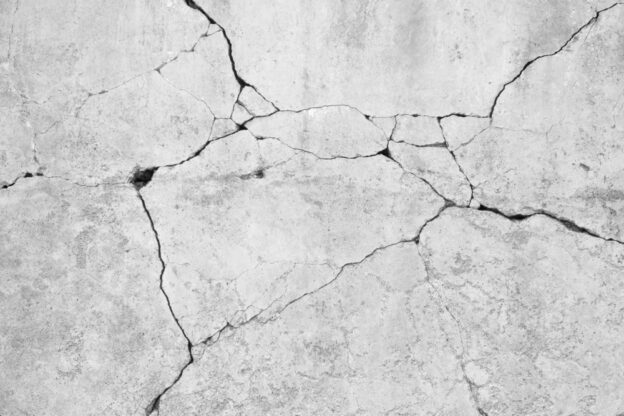
There are a few things no one wants to see on their concrete driveway, and cracks are at or near the top of any such list. Cracks can appear for a few reasons, from sinking soil to poor installation and a few other reasons — if you’re just noticing significant cracks in your driveway, what should you be doing about it?

At Lift-Up Concrete Lifting, LLC, we’re here to help. We provide a wide range of concrete lifting and leveling services for homes, businesses and many other property types throughout Salt Lake City, serving as your one-stop shop for quality concrete that lasts many years. Which steps do we generally recommend if you’re noticing cracks in your driveway you’d like to be rid of? Here’s a basic primer.

Assess Damage Level

First and foremost, take some time to assess the damage — you want to know how bad it is, and how much work is going to be involved in repairs. A good way of assessing the problem is using a broom handle or something similar to press down on different sections of your driveway when it’s dry outside. If there is movement between your driveway and frame that is visible with the naked eye, you’ve likely got some damage.

If damage isn’t very significant, you do have the option of holding off on any repairs. However, as we regularly tell clients, concrete damage doesn’t solve itself — it will only get worse with time, and it’s up to you if you’re willing to deal with the issue now or later.

Repair Options

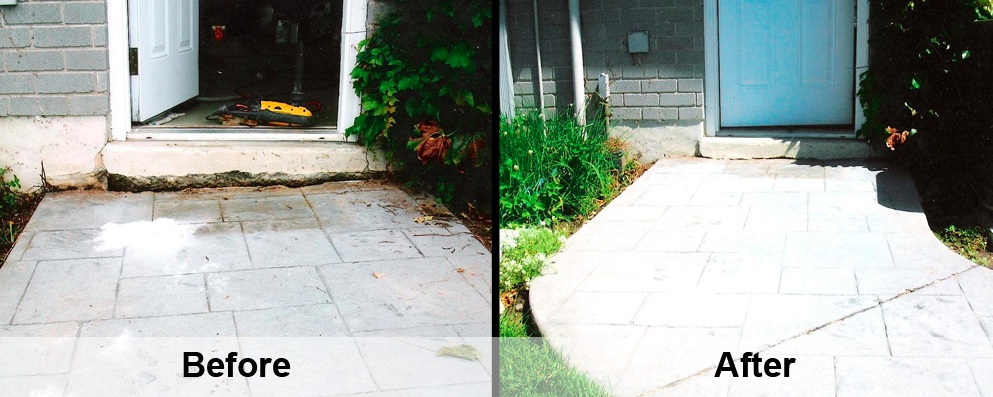
In many cases, moderate or significant cracks in a concrete driveway will be best addressed using the concrete lifting and leveling services we proudly offer to clients. These services can be used to effectively raise and level sections of concrete, aligning them with the surrounding section or other portions of your driveway that are not cracked.

Once we’ve lifted and leveled the affected areas in this way, they will function similarly to a brand new drive — one complete with a decorative touch in most cases!

Replacement for Major Damage

Now, there will also be other cases where cracks and other concrete damage will be so significant that they must be replaced. And while our services are primarily in concrete repair, we care most about our clients first and foremost — we’ll never recommend a repair attempt if the damage is so severe that our efforts won’t really make a difference. Rather, if your concrete has reached this point, we’ll advise you on the proper replacement timeline, plus make recommendations for the ideal contractor if needed.

For more on how you should proceed if you locate cracks in your concrete driveway, or to learn about any of our concrete lifting and leveling services in SLC or other parts of Utah, speak to the staff at Lift-Up Concrete today.

concrete sealing crack stain resistance

Concrete Sealing: Crack Prevention, Stain Resistance, Longer Life

In part one of this two-part blog series, we went over some general themes on why concrete sealing is so important. Used to protect concrete slabs from various threats and damage risks, concrete sealing is an important part of many processes, including both concrete pouring and concrete repairs.

At Lift-Up Concrete, we’re happy to assist clients with a full-service concrete lifting and leveling process that includes detailed sealing of both gaps and the entire surface itself. Our services are applicable to numerous surface types, from concrete driveways and walkways through garage floors, patios and many others. What are some of the other major reasons concrete sealing is so important for your surface? Here are several.

Preventing Cracks

Another key benefit of concrete sealing is the way it prevents cracks from forming in a concrete slab’s surface. As you likely already know, cracks are not only unsightly but can lead to further issues with your concrete, such as water infiltration and other problems.

Excessive temperature changes and pressure from different sources can also contribute to the formation of cracks in a concrete slab. But with proper sealant in place, you can reduce the number of cracks that appear on your concrete surface.

Resisting Stains

For some concrete slabs, the primary concern is the presence of stains from things like oil, grease and other organic matter. An effective concrete sealing job reduces the presence of these stains and helps to prevent them from penetrating into your concrete slab’s surface.

It does so without requiring any chemicals or additives that may lead to long-term damage. While many stains can be removed from concrete through standard cleaning methods, sealing your concrete prevents the potential of such stains in the first place and ensures a longer life for your surface in general.

Longer Lifespan, Less Maintenance

And finally, when your concrete slab is properly sealed, its expected lifespan is extended. If you’re not sealing your concrete at all, the surface itself will erode over time as a result of exposure to anything from water and other liquids to chemicals and air pollution.

On top of this, your maintenance requirements will go way down. Sealants typically last anywhere from five to 10 years before needing a reapplication, and this provides plenty of time between both applications without you having to worry about constant upkeep.

With the help of our concrete sealing services at Lift-Up Concrete, we can provide your concrete with a protective barrier that helps to extend its lifespan and make it more aesthetically pleasing in the process. For more on this or any of our other concrete lifting and leveling services, contact our team today to schedule an appointment or get a free estimate on our services.

concrete sealing risks unsealed

Concrete Sealing: Risks of Unsealed Ogden Concrete

There are several important steps that will be carried out during concrete repair, and one of these is the sealing process. Generally applied after major repairs have already taken place, sealing protects your slab from several risks, including moisture infiltration and others, as you move forward with a pristine concrete surface.

At Lift-Up Concrete, sealing is just one part of our comprehensive residential and commercial concrete lifting and leveling services in Ogden and other parts of Utah. We apply both gap sealants and final sealants to our concrete repair jobs, protecting the entire slab from erosion, water infiltration and more. What are the damage risks that come with unsealed concrete slabs, and what benefits does sealing offer to any slab on your property? This two-part blog series will go over everything you should know in this area.

Risks of Unsealed Concrete

If any of your concrete slabs are not properly sealed, you’re exposing them to significant risk. Here are several possible issues that may arise:

  • Weather disintegration: Exposure to rain, snow and other weather factors means that your unsealed concrete slabs are likely to gradually degrade over time. If you keep those same concrete slabs sealed, however, those elements will have a harder time hitting the surface of the slab and taking their toll.
  • Water intrusion: Unsealed concrete also increases the risk of water infiltration on your property. This is a particular concern during the late fall and early spring, when snowmelt or heavy rains can spell disaster for any unsealed concrete on your properties.
  • Aggregate expansion: Aggregates in your concrete – such as gravel or sand – are likely to expand with the moisture that gets into an unsealed slab. If left alone, this can damage the surface of your entire slab. Sealing is the only sure-fire way to protect against this risk.
  • Delamination: Delamination occurs when the top layer of concrete that has been sealed begins to come loose due to exposure. This is because sealing that surface serves as a protective barrier, one that prevents any significant movement between layers.

Our next several sections, however, will go over how concrete sealing helps prevent these and all related concerns.

Moisture Repellant

Perhaps the most important feature of concrete sealant is its ability to act as a moisture repellant. That’s because unsealed concrete is highly permeable, meaning that any rain or snow that falls on it will start to seep into the slab.

If your slab still has any cracks or fissures in it, then the water will continue to seep in. During the cold Utah winter, water that has seeped into a concrete slab can cause expansion and contraction, which will often crack and otherwise damage the slab.

In part two, we’ll go over some further benefits of proper concrete sealing. For more on this or any of our concrete repair services in Ogden or other parts of Utah, speak to the staff at Lift-Up Concrete today.

concrete composition proportioning reinforcements

Concrete Composition: Proportioning and Reinforcements

In part one of this two-part blog series, we went over some of the basics on how concrete is made. Understanding the composition of concrete is often important for those who are caring for or maintaining it, and it’s a pretty simple formula in most cases.

At Lift-Up Concrete, we’re happy to help with a wide range of concrete lifting and leveling services for any concrete slab that’s been damaged in any way. Our professionals are experts in the way concrete is created and poured into your various slabs, and this expertise often informs our concrete repair services. While part one of our series went over the simple recipe usually used for concrete, today’s part two will dig into a few other important areas to be aware of.

Concrete Proportioning

As we discussed in part one, concrete is made primarily from a combination of cement, water and various aggregates (stone, gravel, sand, etc.). As such, a vital part of its proper installation comes down to using the right mixture of these three ingredients.

A concrete mixture without enough cement, for instance, will be thinner and weaker than originally designed. This can often cause cracking, especially if the concrete wasn’t laid to a specific level during installation, or if it was installed over another material that’s less than ideal. This is where concrete lifting services like ours are vital – we’ll carefully lift and repair your damaged slab so that its leveled out properly again.

Concrete Reinforcements

We should also note here that when a given concrete slab is poured (including many concrete foundations), it’s not simply solid concrete. Rather, the slab is also reinforced with fibers and/or wire mesh, which ensures that it is not only properly supported, but also strong and durable. Depending on the project, these reinforcements may be cast directly into the concrete during pouring (which is why it’s important to have a lift service like us in some cases), or they may need to be interwoven after the slab has been poured.

If your concrete was damaged in some way that caused the reinforcement to become exposed, it can leave you with a weakened structure. This is particularly problematic if the reinforcements are what keep your concrete slab from cracking further. Repairing such damage is vital for maintaining your home or business’s structural integrity and keeping it safe as long as possible.

Decorative Concrete

Finally, there are also forms of decorative concrete that include color additives or concrete printing formats. These types of concrete — plus their care and potential repair needs — require a thorough understanding of how additives or printing will impact the slab. If you have questions here, our team will be happy to answer them.

For more on how concrete is made and poured, or to learn about any of our concrete lifting and leveling services, speak to the staff at Lift-Up Concrete today.

concrete composition mix cement

Concrete Composition: Mix and Cement Notes

Concrete is one of the single most common harder substances used in our world today, but many people — even those who utilize it regularly on their property — don’t really understand how it’s made. Concrete is a combination of a few different elements in most cases, combined to create the finished product you see on areas like driveways, sidewalks and numerous others.

At Lift-Up Concrete, we’re happy to offer a wide range of concrete lifting and leveling services for situations where your concrete undergoes any form of damage. Part of this process, though, and part of our common services provided to clients as well, involves understanding the composition of the concrete we’re working on, as this often plays a major role in how we’ll remedy any damage that’s taken place. For those who are unaware, what goes into the makeup of concrete, and how does this composition vary depending on the type of slab needed? This two-part blog series will tell you everything you need to know.

Standard Concrete Composition

Concrete is a mixture of cement, water and various aggregates. The simplest concrete composition consists of 10-15% cement, 15-20% water, and 65-75% aggregates. This mixture needs to set for 8 hours before the concrete can be used.

When we talk about “aggregates,” we’re referring to a few different possible substances: Sand, gravel, crushed stones and possibly a few others. These may be used in different combinations depending on the exact slab you require.

The properties of concrete are determined by its ingredients. Stirring the concrete after it has been mixed will increase the strength of the material as well as cause bubbles to rise to the surface which can be popped prior to final use. Cement also forms a skin on top, which can be scraped off so that it doesn’t interfere with casting or mixing with other materials like gravel.

Concrete and Cement Are Not the Same

While cement is an important ingredient in the formation of concrete, they are not the same and should not be used interchangeably. Concrete is a mixture of cement, water and various aggregates. Cement itself is the substance that creates the glue, binding these three ingredients together.

Cement can be manufactured using one of eight different ingredients: Lime, silica, sulfur trioxide, alkaline, iron oxide, alumina, and calcium sulfate. Within the concrete world, it will then be made into a paste that hardens and holds the other concrete ingredients together within the slab, with highly effective bonding qualities that allow it to create a long-lasting adhesive effect.

For more on the basic composition of concrete, or to learn about any of our concrete lifting and leveling services, speak to the staff at Lift-Up Concrete today.

concrete AC condenser pads risks

Concrete AC Condenser Pads: Risks and Professional Solutions

In part one of this two-part blog series, we went over some of the basics and roles of not only your outdoor AC condenser, but also the condenser pad it sits on. Generally made from concrete, this pad is responsible for a few things with regard to the AC unit itself, including keeping it level and allowing it to obtain the proper quantities of air from its surroundings.

At Lift-Up Concrete Lifting LLC, we’re here to help with any concrete damage or concerns you may be having on a residential or commercial property, including those on a condenser pad slab. What are some of the additional risks of damaged concrete in the condenser pad area, and how can our quality concrete lifting and leveling services help you avoid these risks? Here’s a primer.

Oil Spread Risks

The compressor unit requires fuel to run, and this fuel is generally oil within the system. Over time, AC condensers may develop small leaks of this oil through refrigerant lines – in normal situations, though, this isn’t a problem, as the oil usually just drips right back down to the compressor without any concern.

On compressor pads that have been damaged or are sinking, however, this will not be the case. Rather, oil leaking through refrigerant lines will begin to pool as it drips, spreading to various unit lines and coils. Not only might this damage these components, it will also create a shortage of oil in the compressor, which may cause overheating and expensive repairs.

Vibration and Wear-and-Tear

Within standard AC compressor operations, some vibration is expected – after all, there are several moving parts at work here. However, there are situations where this vibration can become far too great, including those where internal component movement is causing the compressor unit to move around on the concrete slab.

In these situations, which are sometimes caused by sinking or damaged concrete, there will be nothing to balance the compressor. This may lead to refrigerant lines coming loose and failing to provide cooling to the unit, plus can lead to rocking effects that eventually cause sinking.

Professional Concrete Repair

Luckily, all of these potential issues we’ve gone over to this point are easily avoidable. Have you begun to notice that your compressor pad concrete is cracking, or has sunk even a few inches from its previous level? Don’t hesitate to call our concrete repair professionals, who will provide long-term solutions like lifting, leveling and structural support that ensure your condenser pad properly supports the unit sitting on top of it.

For more on how to care for concrete AC condenser pads, or to learn about any of our concrete lifting and leveling services, speak to the staff at Lift-Up Concrete Lifting, LLC today.
concrete condenser pads homeowners

Concrete AC Condenser Pads: Importance to SLC Homeowners

While concrete repair services are most commonly known for their value on some of the larger concrete slabs on a given property, such as driveways or garage floors, these solutions are also often useful for smaller concrete areas as well. One great example here for numerous homeowners: The condenser pad on which your air conditioning condenser sits outside the home, a pad that’s often made from concrete.

At Lift-Up Concrete Lifting, LLC, we’re happy to provide a robust and varied range of residential concrete lifting and leveling services in Salt Lake City and other parts of Utah, ensuring the quality of concrete on any part of your property. What is an AC condenser, why are AC condenser pads important, and why is it vital to keep concrete condenser pads in a good state of repair? This two-part blog series will go over several important areas to be aware of.

Role of AC Condenser

First and foremost, for those who aren’t aware, it’s important to understand what the AC condenser is and why it matters. The condenser refers to likely the single most important feature of your air conditioning: It sits outside your home and collects air to be cooled, then passes it through your ducts and vents and into your home to cool the space.

A major factor for condensers is clearance – they need space on all four sides and above to allow for proper air intake. For this reason, they are typically set up on what will be known as condenser pads.

Concrete AC Condenser Pads

And while there are a few materials that might be used for today’s condenser pads, the most common one has long been – and remains – concrete. Concrete slabs are perfect for supporting an AC condenser, with enough strength to support their weight plus the ability to be built in any location. This makes it easy for condenser pads to be created at any precise spot on your home’s exterior.

However, if you do not properly attend to this concrete, it could experience sinking, water infiltration or other forms of damage that can worsen its functionality and aesthetics simultaneously. Our next several sections, leading into part two of our series, will go over the issues that will be prevented by ensuring you have solid, high-quality concrete – including by the sorts of concrete repairs we offer regularly to clients.

Problems With Condenser Sinking

As we noted above, clearance is a huge factor for any AC condenser unit. If the concrete it sits on begins to sink, however, the condenser will fall partially below-ground – and will not have the same clearance throughout the component. It will be more difficult for it to draw in air, meaning it will have to work harder than usual just to produce the same amount of cooling. By allowing concrete to sink or settle below the condenser, you’re actually diminishing your overall AC efficiency.

For more on concrete AC condenser pads, or to learn about any of our concrete lifting and leveling services in Salt Lake City or other parts of Utah, speak to the staff at Lift-Up Concrete Lifting, LLC today.