Category Archives: Blog

DIY Concrete Lifting Can Go Wrong

How DIY Concrete Lifting Can Go Wrong

Concrete lifting is an effective fix … if it’s done right. If not, you’re stuck with a bigger problem than when you began, and that’s why the DIY route isn’t the recommended path to take.

Even if you’re hands-on with most home repairs, a concrete slab isn’t as easy to deal with as your gutters or landscaping. And sometimes an attempt at a repair can leave you in a worse mess than when you started.

You Know You Need Concrete Repair

One of the best features about concrete as a building material is its longevity. It is structurally sound for years, well past the time frame of many other materials, such as wood or asphalt. But concrete isn’t just durable, it’s also repairable! You can get it back to the way it used to look.

Even some of the most extreme concrete damage can be fixed. It simply must be done correctly.

You Don’t Have the Right Tools

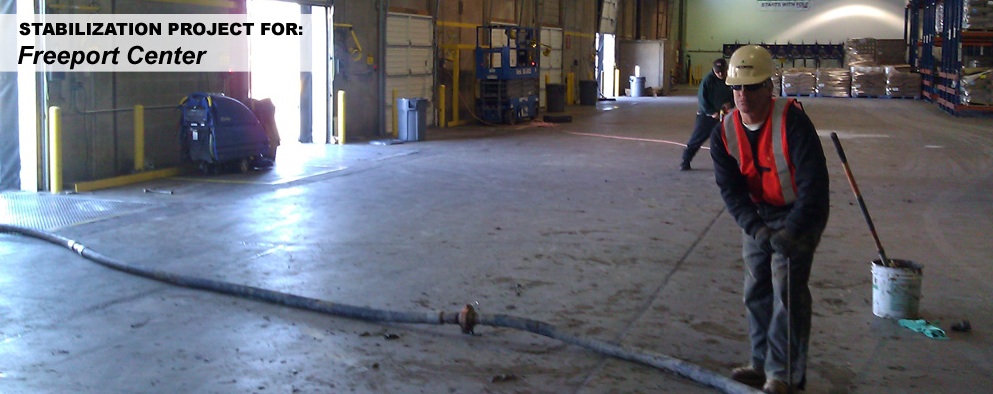
The first way that concrete lifting could get derailed is if you find that the tools you’re using aren’t adequate for the job. Professionals use specialized equipment to bore small holes into the surface of the concrete, then they use pressurized pumps to inject the right stabilizing material beneath the slab.

If you try to handle this task with tools that aren’t specifically intended for this purpose, you could wind up damaging more than the surface — you could cause a weakness in the slab’s structure so that future professional concrete lifting won’t resolve the problem.

It Takes up So Much Time

One of the benefits of hiring a professional team is that the job is completed quickly — usually within a day.

If you depend on an online video and a makeshift tool set, even if you get the issue resolved on your own, it could take you much longer than you originally intended. Since one of the benefits of concrete lifting is saving time, this could negate one of the top factors that causes many homeowners to choose this repair method in the first place.

You Could End Up Needing Replacement Anyway

A makeshift concrete repair isn’t a long-term fix. With our professional concrete lifting, we only take on the jobs where we know we can provide a sturdy, lasting outcome. A DIY project is less of a guarantee — you hope it works, but you have no assurance that it will.

If there’s a chance you could wind up damaging your concrete and needing complete slab replacement anyway, why take the chance? Don’t waste your time, money and energy — trust our cost-effective services instead.

Make the Right Move: Get a Professional on the Job

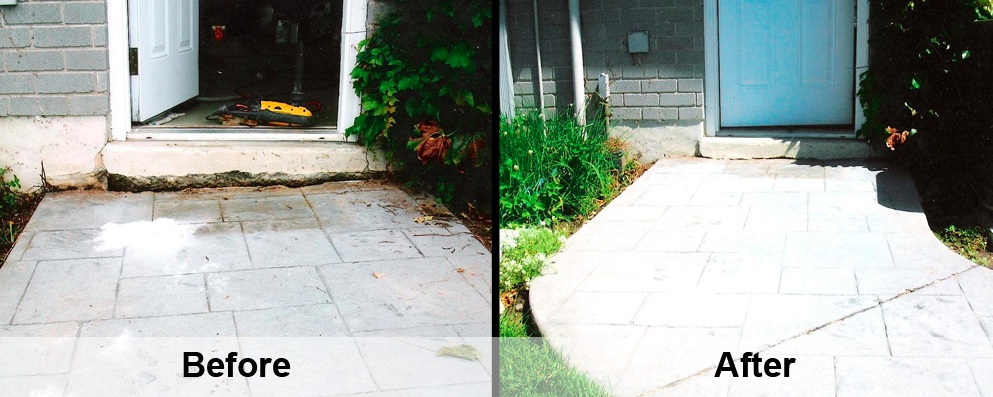
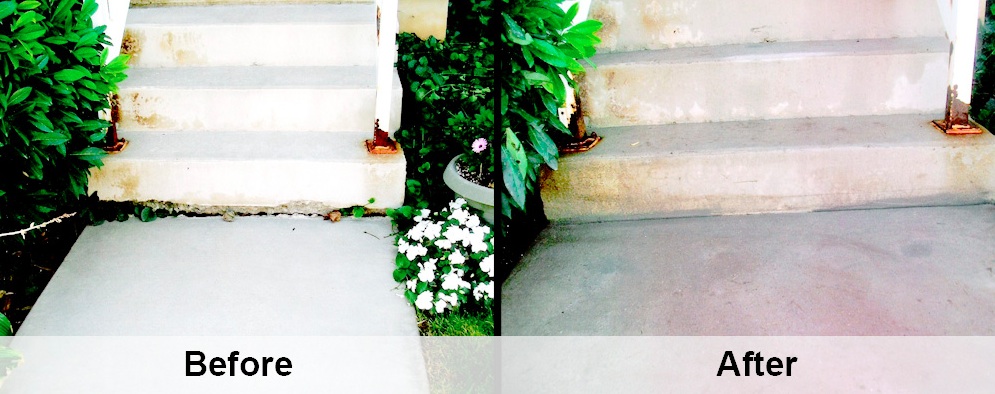
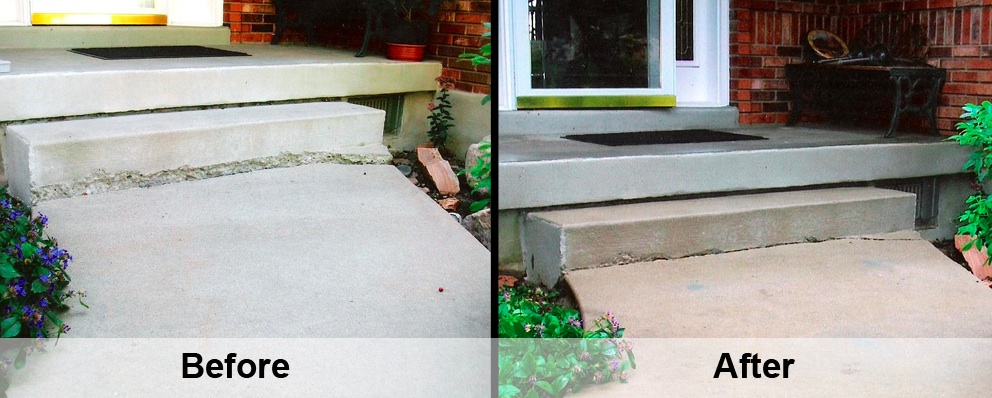
At Lift-Up Concrete, we are in the business of transformation. You won’t believe the incredible before and after you’ll be able to showcase to your family, neighbors and friends. Concrete lifting can work for you without you doing the work! Contact us today for a free quote.

Fixing Concrete NOT Worth It

When Is Fixing Concrete NOT Worth It?

Fixing concrete is usually an option, especially with the team at Lift-Up Concrete on your side. But just because something is possible doesn’t mean it’s the best use of your money.

Our goal with our concrete lifting and repair services is to provide our customers with value. It’s usually a smart move to repair instead of replace concrete, given the extent of the work of tearing out and re-pouring an entire slab. But there are some instances where fixing concrete just doesn’t make sense.

Below are three scenarios where it might not be worth it to go with repairs, whether due to cost or ineffectiveness, and replacement will be the best option.

There Are Surface-Wide Problems

Concrete is one of the most common building materials because it lasts. But in a climate like Utah’s, winter takes an extreme toll.

Over time, you’ll begin to see pitting and other forms of surface degradation. Not only does this ruin the aesthetics, it’s not simple to repair, either. You need to either patch the problem areas or refinish the surface to restore its look.

Beyond just the drop in the looks department, concrete damage quickly spreads throughout the structure, contributing to a more brittle slab. You are more likely to see serious structural problems as a result. It’s not that you can’t lift and level concrete that has surface-wide issues, the question is: Is it worth it? It might be time to replace it.

There Is Cracking and Separation

Our team is usually called to the scene when concrete slabs begin to crack and sink. It’s more common than you might think, which is why we have so many Utah customers who need our services.

But one situation where lifting and leveling doesn’t solve the entire problem is when the crack that started it all begins to widen dramatically. When there is a huge gap between the two cracked portions of the concrete, lifting isn’t going to solve the problem.

When Age Is More Than a Number

Concrete lasts for decades if you take care of it through resealing and leveling when needed, but after some time, it might start to show its age, especially if it’s the platform for driving, playing, sitting, diving and more. Once your concrete (especially your driveway) has reached the 20-year mark, putting money into repairs will not be a permanent solution.

If your slab or surface is past its useful life, we will recommend replacement. We always give you our best professional recommendation on how to go about fixing concrete and whether we believe it’s worth it in your case. At Lift-Up Concrete, we deliver the results you want, every time.

Driveway Leveling Contractor

Do You Have Heaving or Settling Concrete?

Both heaving and settling concrete pose major threats to your outdoor structures, and maybe even your home.


As a homeowner, limiting damage to your driveway, patio or walkway is one of your top priorities. You want your concrete pool deck to stay beautiful for years.

It starts with diagnosing the problem. Do you have heaving or settling concrete? If so, we can come up with a plan to resolve the issue fast, and for good.

Causes of Settling

If your concrete is settling, the inner area is lower than the edges. Settling is a problem because it usually means cracks develop and separate the slab into sections, which begin to sink.

Settling concrete is mainly caused by poor soil compaction. A certain amount of settling isn’t unusual — in fact, it’s expected — but drastic settling is usually an indication that the installation contractor did not compact the soil enough before pouring the building material. Compaction is critical to a long-lasting concrete structure. Soil washout could be another issue, which is likely the result of poor landscaping and drainage.

Luckily, there’s a way to fix it without tearing out the slab and starting over: concrete lifting. By stabilizing the base and eradicating air pockets, slabjacking gives the concrete a firm, permanent position. And as a part of our concrete lifting services, we always provide recommendations on how to resolve the source of the issue, especially if there is a simple preventive measure that can be taken, such as correcting drainage paths.

The Causes of Heaving

With heaving concrete, the center of the slab is pushing upward and the edges are lower. You might also notice crumbling at the edges of the concrete, meaning it’s happened before.

Heaving concrete is almost always due to the soil conditions. Soil with a high clay content is ultra-absorbent. When it rains heavily, the soil expands drastically, pushing the slab upward. During drier times, it shrinks, returning the concrete to its previous level.

While slabjacking is most effective for extreme settling, it can help with heaving as well, since part of the process is to address excessive moisture levels.

Avoid Complications — Get Professional Repair

The best time to fix your heaving or settling concrete is now. Let’s make your concrete a safe, level area you can use without risk of injury. Talk to Lift-Up today!

concrete defects

Can You Spot Concrete Defects Right After it’s Poured? 

Concrete defects mean trouble. If you notice a problem right after you’ve had a new structure poured, it’s worrisome.

Problematic Signs

What are some of the initial troubling signs your concrete installation contractor didn’t do the best job on the project?

  • No Control Joints

Control joints are impressions made in the concrete that are designed to control cracking. Cracks are inevitable — they’re a part of the natural contraction process after the material dries. Control joints ensure that concrete cracks the way you want it to, instead of the way it wants to. This prevents a spider web of cracks that could ultimately weaken the whole slab.

  • Immediate Cracking

Cracking should take place over time — instant cracking is an indication the surface was not compacted enough for the slab. You could eventually see even more cracking and sinking, which will lead to the need for repairs.

  • Water Pooling

Surfaces should be even. Any sloping you see should be intentional, to direct water into a drainage area. Pooling water on concrete only weakens the material over time.

Prevention: Find a Good Installation Contractor

The best way to make sure you don’t have any concrete defects is to depend on a reputable installation contractor from day one. Below are some of the signs you’ve found a good company.

  • Certifications and Licensing

They are forthcoming about their certifications and their license to work in the state or county. They can provide proof of both.

  • Insurance

They have adequate insurance to cover any issues that might come up during the project. Your property is protected and you’re protected from workers’ lawsuits.

  • Reviews

Their reputation for excellence precedes them! Ask for referrals from previous customers or check their online reviews.

  • Experience

They have many years of experience in the field, specifically with projects of your kind. You want an expert’s touch, not an amateur’s mistakes.

Too Late? Get Repairs Fast.

If your concrete has already been poured and you’ve noticed concrete defects that need to be addressed, don’t wait. Concrete issues don’t get better. When you spot the first problem, get a repair quote from our team.

Lifting Is Better Than Replacement

You just invested in a new concrete structure — do you really want to pay to tear out and replace the entire thing? If you’re like most financially savvy homeowners, the answer is no! Instead, pay for concrete lifting to even out and correct most concrete defects. Lift-Up Concrete can take care of it, and for substantially less than you’d pay for a replacement. Call today for your quote!

Concrete Damage from Tree Roots: What You Can Do 

Concrete damage harms curb appeal and therefore, property value. It has many causes, and one of them is tree roots pushing up from underneath. If you’re noticing heaving, sinking, cracking or crumbling of your concrete driveway, patio or walkway, underlying problematic tree roots could be to blame. Concrete Damage from Tree Roots: What You Can Do 

Can Trees and Concrete Structures Coexist?

The function of tree roots is to absorb water to feed the structure. Since concrete absorbs water, roots are attracted to it.

Tree roots can devastate a concrete surface, though it won’t happen overnight. It’s possible to have both trees and concrete coexist, but it takes some careful planning.

When Planning Landscaping or Building

When you first consider planting trees on your property, do yourself and your concrete a favor: Plant the tree at least 50 feet away from all structures. This ensures the roots have enough room to spread without interfering with any existing walkways, driveways, foundations, etc. Any tree or shrub that poses a threat should have a wide distance between it and unmovable structures. While roots can still make their way to it over time, it’s your best preventive measure from a landscaping planning perspective.

When pouring the material at the time of installation, you can put measures into place to prevent root damage. Install a root barrier before pouring to direct roots downward. It will take some extra digging, but installing either a plastic or fabric root guard will help defend the surface against water-seeking root systems.

On the Concrete Side of Things

When you make repairs to concrete damage caused by tree roots, you shouldn’t make any cuts to the roots until you talk to a certified arborist. It’s possible to remove some parts of a tree’s root system, but it’s essential that you consult an expert before you do so. You don’t want to threaten the tree’s stability or its nutrient feeding system.

Once you get the go-ahead to clear a space for repair, always consider concrete lifting as an option before you consider replacement. It’s more cost-effective, since you don’t have to rip out the entire structure.

Give Us a Call

When your trees won’t stop causing concrete damage, it’s tough, but it’s not a problem we can’t help solve. Make Lift-Up Concrete your first call when you’re worried about concrete damage. We offer free consultations and quotes — call us today.

What to Do When You Have a Sinking Concrete Driveway

What to Do When You Have a Sinking Concrete Driveway

A sinking concrete driveway is ugly and dangerous. It compromises your curb appeal and creates trip hazards. It’s an issue you need to address right away, but if you’ve never dealt with this problem before, you may be at a loss.


Why Is Your Driveway Sinking?

First, it’s important to understand why concrete sinks in the first place. Before new concrete is poured, the soil must be fully compacted. If this isn’t done properly, the soil will shift into the air pockets and the ground beneath the concrete will sink. It might not be noticeable at first, but over time, soil compaction can cause major structural issues for the concrete slab.

Another common cause is improper drainage. If your gutters direct water to the edge of your concrete driveway, erosion can wash away the soil supporting the driveway.

Also, if you consistently park a heavy vehicle or dumpster directly on one portion of the concrete, this can lead to sinking as well.

Your First Option

One way to correct the problem is to rip out the concrete and replace it with a new slab.

It’s effective, but it’s expensive. It’s also time-consuming. If you’re looking for quick fix, this is not it. The demolition alone could take multiple days, as concrete is hard to break and heavy to transport away from the site. This job also may damage your landscaping.

The Better Option

At Lift-Up, we always want to present alternatives when our customers have concrete problems. You can use concrete raising to correct the issue.

With concrete lifting, our team drills holes in the slab that’s sinking. We attach our specialized pump and inject grout beneath the surface, filling the void and bringing the driveway back to its previous level. Then we patch the hole, fill the crack and let it cure for a couple of hours. You can start driving on it again the same day!

How We Help

If you don’t have experience in concrete lifting, it can be hard to determine whether the concrete needs to be replaced or if a repair is possible. Our team can help you make this decision when we come to your home and look at the damage.

In extreme cases, we won’t recommend concrete lifting to fix a sinking concrete driveway because we know it won’t deliver the results you want. If the surface is crumbling and cracked and we can tell it’s old, we won’t suggest you spend your money on anything other than a replacement.

When we take on your sinking concrete driveway, we always follow through. At Lift-Up Concrete, we have your best interests in mind.

Reasons You Need Void Filling Under Concrete

5 Reasons You Need Void Filling Under Concrete

Concrete void filling is critical to the structural integrity of your living and driving areas. This could include your driveway, patio, walkway, pool deck or any other concrete slab you depend on to support you and your activities.

Many times, customers call Lift-Up Concrete after their concrete has already broken and sunk because of a void, but we recommend void filling before this happens.

Below are five reasons your home (and you) will benefit from this service.

1. Prevent Critters from Building Nests

If there’s a protected, warm hole for critters to take up residence in, you’d better believe they will find it! When animals are allowed to make their home beneath your concrete, it sets the stage for a range of problems. The pests could start getting into your garbage every day. They could find entryways to your home and eat building materials like insulation.

It’s in your best interests to keep all critters away, and it starts with eliminating all potential areas in which they could nest.

2. Stop Erosion in its Tracks

Maybe the void underneath your concrete formed due to improper drainage. Void filling should be one of the steps you take to correct this problem.

But first, assess where the water is coming from and work with a landscaping expert to direct the flow somewhere other than underneath your concrete. Next, use void filling to take care of the empty space under your concrete.

3. Guard Against Concrete Damage

One of the critical reasons void filling should be a priority is because the longer you wait to address the issue of unsupported concrete, the higher the likelihood that the concrete will cave in.

Concrete is strong, but it needs foundational support to keep it stable. Voids allowed to expand unchecked are typically the top cause of concrete damage.

4. Save Money!

Void filling isn’t a major expense — and it can prevent a major expense! When you hire Lift-Up Concrete to take care of the voids that are causing problems, you will save money. We get the job done affordably and you won’t have to pay for critter removal, erosion repair or concrete replacement.

5. Protect Your Curb Appeal

Finally, one of the top reasons you need void filling is to preserve your curb appeal. Your home should look beautiful, and keeping it that way helps retain your home’s value. It’s a preventive measure that can go a long way toward keeping your home looking its best.

How can we detect voids under concrete? How much do we charge for void filling?

If these questions are on your mind, call Lift-Up Concrete today for a free quote.

Spalling Is a Sign Your Concrete Needs Help

Spalling is a concrete defect caused by either bad installation or environmental factors. Spalling looks like the concrete is flaking on the surface, and if it’s severe, it can break apart enough to show the aggregate beneath the finished layer. It’s a sign you need to make repairs now, before the problem gets worse.


Why Does it Happen?

If the surface was poured when temperatures were either too hot or too cold, this can lead to more spalling than normal throughout the life of the slab. In the heat, the moisture in the concrete dries out too quickly when it’s poured, leaving it brittle and susceptible to spalling. In the cold, the top layer might freeze before it’s done curing and flake off afterward.

Another common cause of spalling is using too many de-icing chemicals. Concrete is one of the sturdiest building materials in the world, but it’s not immune to Utah freeze/thaw cycles. When the sun warms the ice and snow, the melting runoff seeps into the concrete, an absorbent surface. When night falls and the temperatures drop, the moisture within the concrete freezes and puts pressure on the internal structure. The cycle repeats throughout the season.

As time goes on, spalling can occur when the internal pressure becomes too great and breaks apart the upper layer.

What Can You Do to Stop It?

Spalling isn’t pretty. More importantly, it’s a sign of weakness in the slab, so it’s vital to address.

Your first step should be to find a new way to melt ice. De-icing salts only accelerate the freeze/thaw cycle, making it more likely that your concrete will spall. You can also look into refinishing. This is when the top layer is covered with a new layer and smoothed over to look as good as new.

When You Need Repair

If you’re going to refinish the top of your concrete, the entire slab has to be level first to achieve the best results. What’s the fastest way to fix cracks and sinking? Concrete lifting.

At Lift-Up Concrete, we’re the concrete experts and we’re not afraid to brag about it. Using our well-practiced techniques and our solid grout material, we’re able to quickly level and stabilize your surfaces and structures. It’s an instant curb appeal upgrade, because we get it done in just a few hours.

Whether you’re dealing with spalling or sinking, cracking or crumbling, call the team at Lift-Up Concrete. We’re always here to answer your questions and to help you repair your concrete.

Patio Concrete Lifting

One-Day Concrete Repair Can Make All the Difference

Slabjacking is a one-day concrete repair solution that can seriously speed up your renovation timeline and get your house ready for guests or prospective buyers — fast. One of the biggest advantages you’ll find with concrete lifting as compared to other repair options, such as a tear-out and replacement, is the speed at which the job is completed. Better yet, the concrete is fully stabilized and ready for use just hours later.


Below are four scenarios in which you should choose one-day concrete repair over other options.

Before Your Pool Party (Or Any Party!)

Concrete lifting of a pool deck is fast and efficient. We drill the necessary holes, inject a grout beneath the surface into the void, and the pool deck is back to its previous, even level immediately.

When you’re gearing up for a pool party, this can be the exact solution you’re looking for. You don’t have the time or the money to re-pour your concrete pool surround at the last minute. Lifting is a one-day concrete repair that works.

It’s not just for a pool deck either. Your patio or any other concrete area is a candidate as well.

Before You List Your Home

When you decide to list your home for sale, the pressure is on for you to take care of that maintenance and repair list. Your realtor might have pointed out that your driveway or walkway isn’t looking its best. There’s a quick way you can handle that: one-day concrete repair.

Call our team in to take care of any issues that threaten your curb appeal before your open house!

When There’s a Risk of Injury

Your homeowner’s policy is there to protect you from lawsuits filed by anyone who might be injured on your property. But if they can prove negligence on your part, you might have a problem on your hands.

Talk to your insurance agent if you’re concerned about your coverage. But better yet, talk to us about ways we can reduce injury risk by evening out the walkways and driveways your guests (or the mail carrier) walk on every day! Get a fast solution with an instant repair.

When it’s Holding up Construction

What if you want to build a garage on your concrete driveway, but it’s not as level as it needs to be? You don’t have to pour a new driveway and wait for it to cure — you can just repair the one you have with a fast fix from Lift-Up Concrete.

Ready to resolve your sinking, cracked concrete issues? Your one-day concrete repair is just a call away. Get Lift-Up Concrete on the job!

Why Slabjacking Now Will Pay off Later

Why Slabjacking Now Will Pay off Later

Slabjacking is a method of concrete repair that’s fast, efficient and long-lasting. There are too many quick fixes that leave your home or business better for a while, but quickly disintegrate so you’re back where you started. Slabjacking is a long-term repair that’s done quickly — in one day or less. It’s an investment that pays off.

Avoid Dangerous Structural Issues

Is your garage built on a concrete slab? What happens when this slab or just a portion of it begins to sink? What if the garage is also connected to your home?

This isn’t just an aesthetic issue. It threatens the structural stability of your garage and home.

When you opt for slabjacking, you’re addressing the problem at the root. Injecting grout into the chasm under the concrete lifts it back into its proper position.

Avoid Expensive Replacement Projects

When concrete starts to sink, the problem only gets worse. Besides the structure that sits on top of the concrete, the concrete itself can be expensive to replace.

The cost of concrete replacement, even if you’re just ripping out some steps or a walkway, is much higher than slabjacking. You’ll save by slabjacking now, before the problem worsens and replacement is the only option left.

Keep Your Home or Business Looking Good

Slabjacking is a great way to preserve curb appeal. For both a home and business, aesthetics are key. If you plan on selling your home anytime soon, slabjacking will pays off. For a business, slabjacking helps when prospective customers notice you when they’re driving by and decide to stop in. Cracked, sinking concrete can potentially cost you a home sale or a customer.

Trust Lift-Up to Lift it Up!

Lift-Up Concrete specializes in raising sunken concrete that you may think at first glance has no chance of revival. We take on the tough jobs and we deliver, successfully restoring concrete surfaces. Lift-Up Concrete offers free quotes and professional recommendations for home or business owners who need a fast resolution to their sinking concrete problems.

Slabjacking pays off when you trust the pros!