Category Archives: Blog

concrete slabjacking Utah

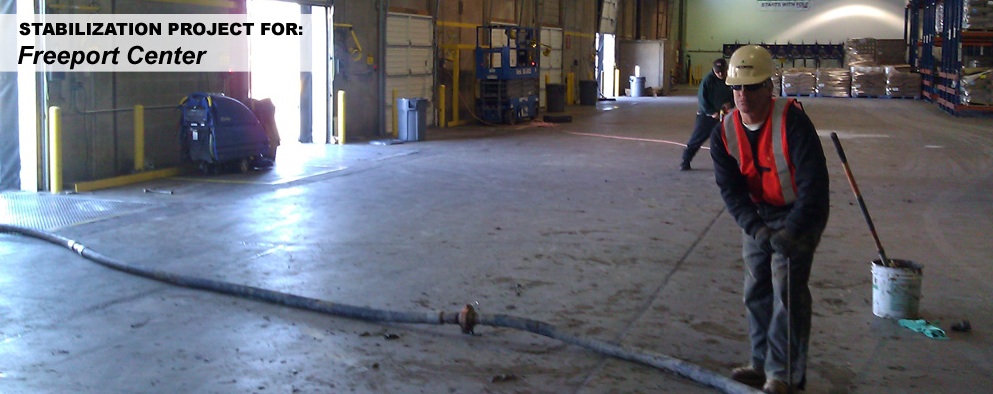
Slabjacking Can Fix These Unexpected Areas

Concrete lifting, popularly known as slabjacking, isn’t a new concrete repair method; it’s been
widely used for years. But with modern tools and advanced grout mixtures, it’s now more
effective than ever.


You may be surprised to learn just how effective slabjacking can be in areas you thought were
damaged beyond repair. Don’t write off your sinking concrete just yet — there may be hope in the cost-effective, speedy repair solution known as slabjacking.

The following four areas can benefit from professional slabjacking:

1.Your Business Parking Lot

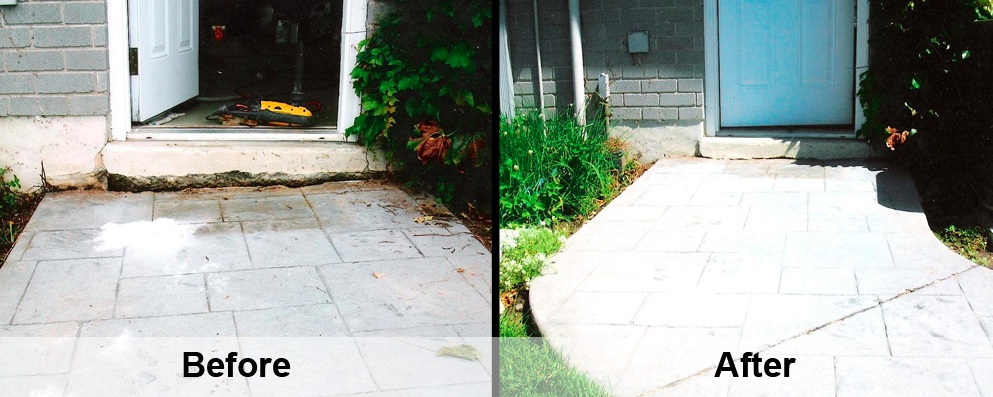
Sure, slabjacking can raise your sidewalk or a sunken portion of your driveway, but what
about the uneven areas in your company’s parking lot?

When concrete parking lots sink, business owners worry about how it looks and how it could
affect their customers and employees. A commercial property that appears to need
maintenance doesn’t contribute positively to your business’ reputation. Also, trip-and-fall
injuries are a real threat, and evening out your concrete could reduce this risk.

Believe it or not, it doesn’t matter how big your parking lot may be — slabjacking has the
power to handle large areas.

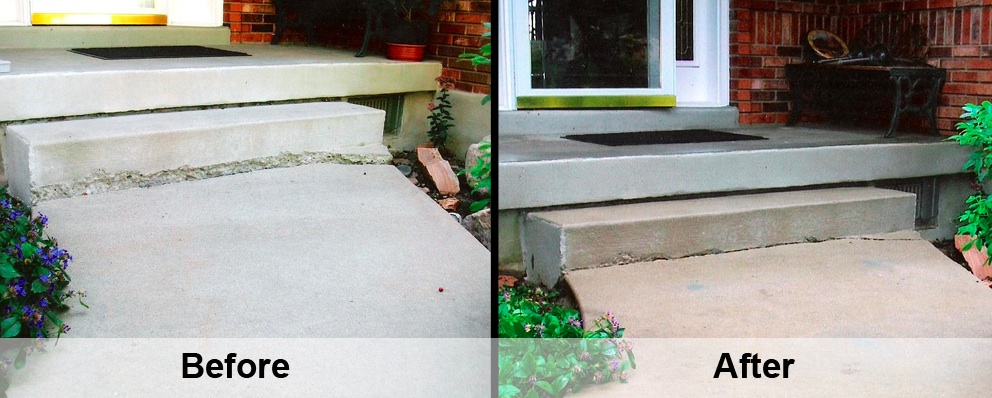
2.Your Tilting Porch

Do you have a porch that’s tilting away from your home?

The cause may be shifting concrete footings. Soil erosion and settlement can compromise the
stability of your porch’s concrete footings, but slabjacking can help move them back into their
original position and guard against further movement.

You will be free to safely enjoy backyard barbecues on your deck once again!

3.Your Sinking Basement Floor

Slabjacking works inside your home as well as outside. When your basement floor cracks and
one half begins to sink, your first instinct is to hire an expensive foundation repair company.

You should definitely have the problem inspected by a foundational engineer, but don’t
discount slabjacking as a potential repair option. Strategic concrete lifting targeted to
problematic areas could put a stop to the problem, as long as the root cause of the foundation
trouble, such as soil erosion, is addressed as well.

4.Your Cracking Pool Deck

Your backyard pool is a gathering place for neighbors, family and friends in the hot, dry
summer months. You want it to look inviting and you want your pool area to be a safe
environment where everyone can cool off.

What do you do when a section of your concrete pool deck starts to sink? Not only does it
look unsightly and create a trip hazard, it could also damage your pool’s liner — that’s an
expensive fix.

Slabjacking can stabilize a shifting pool deck and make those cracks disappear, and all for a
small fraction of the price of complete pool deck replacement.

Want to learn more about how slabjacking can help restore your home or business property? Call Lift-Up Concrete today to get a free quote for your project.

slabjacking timeline

Slabjacking Timeline — How Long Does it Take?

Is slabjacking the fast, easy concrete repair you’re looking for? Will it restore your stairs, driveway, walkway or patio within your desired timeline? Most importantly, is it a repair that will last?

The slabjacking process is straightforward, and is usually completed in less than a day, but time frames vary based on the extent of the job. Depending on whether you’re looking for a major or minor residential, commercial or municipal repair, the time invested in the project may be different.

The First Visit

It’s important to get an in-person assessment from your concrete lifting contractor before you commit to a slabjacking project. At this meeting, the contractor will do a full examination of the issue you’re trying to fix and offer their best recommendation as to the appropriate solution.

Besides giving you a cost analysis, they will also estimate how long it will take them to complete the job. At this point, you can decide if you want to move forward.

Project Day

On the day the project will be completed, your contractor will arrive with all of the tools and materials needed to handle the repair. The first step in the process involves drilling a hole in the concrete. While this won’t make too much of a mess, it can get dusty.

Next, the contractor will attach a hydraulic pump to the hole. They will use this machine to transport a stabilizing concrete slurry mixture underneath the sunken slab. This grout displaces the air and shifting soil that previously made for an unstable foundation for the concrete structure.

As it gradually fills the void, it will effectively jack up the slab to its previous even level. Again, this isn’t a messy procedure, and it’s only as noisy as a lawnmower. The gas-powered pump completes the job quickly and efficiently.

After the slab has reached its target level, the contractor will patch and fill the hole they drilled with regular concrete. While it won’t match the color of the rest of the slab exactly, over time it will fade and become less noticeable.

Altogether, the project shouldn’t take more than a few hours for the most basic repair, but for lifting a large area, expect a full day of work.

You’ll be able to walk on the raised surface immediately, and vehicles can drive on lifted concrete within four to six hours.

Compare to a Complete Replacement

Besides the overwhelming cost saving slabjacking offers over concrete replacement, there is a major difference in how long the job takes, too.

Replacing concrete involves quite a few additional steps. First, the contractor must excavate. This is a time-consuming, extensive process that can ruin nearby landscaping. Then you have to make sure you have the right permits to legally rebuild the concrete structure, especially if you’re making changes. After the actual building is complete, waiting for the concrete to cure can take weeks or even months.

There is no doubt about it — the fastest concrete repair option is slabjacking. Contact Lift-Up Concrete today to get a quote and learn more about the process.

tree root damage

Tree Root Sidewalk Damage: How Concrete Lifting Can Help

Tree root sidewalk damage makes a mess of concrete and creates major trip hazards. But when encroaching tree roots start to make your sidewalk buckle or sink, ripping it out and re-pouring it isn’t your only option. Concrete lifting, otherwise known as slabjacking, may offer a more cost-effective and convenient solution.

Are Your Sidewalks Safe?

Are you responsible for keeping your sidewalks hazard-free and safely walkable? Talk to your city or town. In some cases, the city is responsible for the cost of repairs. In other situations, even though the city may technically own the land between your lot and the street, the homeowner is responsible for the repairs.

Every municipality is different, and the only way you will know if it’s your responsibility is to contact the town directly to find out. If you are responsible and you have severe tree root sidewalk damage, the town may issue a citation to force you to make the necessary repairs.

What You Should and Shouldn’t Do

What shouldn’t you do? Don’t cut the roots of the tree that’s causing the damage. Unless you get approval from the city, cutting the tree roots could result in a fine. Not only that, it isn’t an effective way to solve the problem. They will simply grow back, and you’ll just delay the issue.

Also, don’t depend on tree growth inhibitor products. They won’t produce the desired effect. You will only make the roots grow larger, because this treatment diverts nutrients from the leafy crown to the roots.

What you should do? Start looking for help right away. You don’t want to wait until you’re close to the end of your repair deadline. Call concrete contractors to find out who is experienced in this area and who has a plan to solve your tree root sidewalk damage.

How Concrete Lifting Works

While concrete lifting can’t help lower a slab once it’s been raised, it is a method that can be used to raise a sinking section of concrete. You could also use it to make a section level with the raised area.

The first step in slabjacking is to drill a small hole into the section of concrete to be raised. Then a specialized grout is pumped beneath the surface. It raises the slab until it’s even, and the trip hazard is gone. Then the hole is sealed and the sidewalk is fully functional once again.

Repairs vs. Replacement

You should consider the cost — for the most part, concrete repair is less expensive than concrete replacement. Excavating and building a new sidewalk will require more time, and you must get work permits and city approval. Concrete lifting could potentially solve tree root sidewalk damage in less than a day, for a much lower price.

Contact Lift-Up Concrete today to schedule a time when we can examine the problem and see if slabjacking is the right repair method for your situation.

concrete lifting permit

Do You Need a Concrete Lifting Building Permit?

Under what circumstances is a concrete lifting building permit required?

You want to make repairs to your property as soon as possible, but you don’t want to violate local building code in the process. That will only mean more expenses and frustration for you in terms of citations and fees.

It’s smart to plan your concrete repair project ahead of time, and that includes researching the building code that applies to you, depending on the town you live in.

Making Repairs vs. Building a New Structure

In general, a homeowner or contractor who is building a new structure versus someone who is only making repairs to an existing structure is going to be subject to more code restrictions. For example, applying for a permit to build a shed will be much more involved applying for a concrete lifting building permit to repair a small section of your driveway, if it’s needed at all.

Structural vs. Nonstructural

Most homeowners assume that if a project involves altering a structure, a permit is needed. If the project involves repairing a nonstructural element, they can forego the permit application process.

While this perception is occasionally accurate, it’s better to assume that a permit is always necessary, because in many towns, the regulations are much stricter than you might think. For example, in Logan, Utah, replacing or changing existing stone, brick or concrete requires a permit.

On the other hand, in Orem, Utah, you can repair a concrete patio or porch without city approval, but only if it doesn’t have a roof.

Each municipality has its own building code, and though many regulations are the same, a concrete lifting building permit may be required in one town but not in a neighboring city.

Private vs. Public Property

If you want to repair a sunken sidewalk in front of your home, you will almost always have to apply for a permit. Sidewalks are built on public land, so you cannot repair any damage without city approval.

The Application Process

To apply for a building permit, contact your town’s zoning office. You will have to submit an application and pay the required fee up front. They may request additional information if you are using a contractor to complete the repair work, such as proof of the company’s certifications. Once your concrete lifting building permit is issued, work can begin.

Lift-Up Concrete is fully licensed and insured, ready to help with all types of concrete repair projects, from sidewalks to stairs. We will help you obtain the necessary concrete lifting building permit and complete the work on schedule.

sunken concrete Utah

In 4 Steps, Slabjacking Makes Concrete as Good as New

Slabjacking: It’s a cost-effective way to fix that crack in your driveway or those sinking concrete steps.

What’s also great about slabjacking?

It’s fast. The entire process, from evaluation to completion, takes less than a day. And you can start walking, driving and even dancing on your concrete just hours after the job is done.

Interested in learning more? These are the four main slabjacking steps that make old, sinking concrete nice and even again.

1. Assess the Surface

Slabjacking isn’t for amateurs. Sure, you may be able to find the equipment online or in a hardware store, but the knowledge of how concrete responds is gained over time and the course of many successful repair jobs.

Hire a professional who will carefully examine the issues, find the source and plan a targeted repair approach. At this point, you get a free estimate to help you decide if you want to continue.

2. Drill Small Holes in Key Locations

The first step for the technician is to use a powerful drill to accurately position a few small holes in key areas of the concrete surface. These holes penetrate the slab, making a path for the incoming grout to flow and stabilize the structure.

3. Pump Specialized Mixture Underneath the Slab

Once the holes are drilled, a hydraulic pump transmits a special mixture through a nozzle positioned over the hole. This grout flows underneath the slab, lifting it back into place. Eventually, the grout will harden and provide a permanent fix.

4. Finish Filling Holes and Seal All Cracks

The fourth and final step involves refinishing the surface of the slab or structure. The holes and any cracks are filled. This is necessary both for cosmetic reasons and practical reasons.

Not only does it look better when cracks are filled, it also prevents further degradation. Repairing cracks ensures no water gets underneath the slab and further erodes the soil, which could potentially lead to more sinking. The surface is sealed and it is then ready for use within a couple of hours.

Lift-Up Concrete handles the slabjacking process with ease, whether you need repairs for your driveway, pool deck, staircase or sidewalks. Contact us today, and get the process started with a free estimate. Soon, your concrete won’t be an embarrassment, an eyesore or a liability. It will look as good as new.

commercial concrete inspection

When Was Your Last Commercial Concrete Inspection?

A commercial concrete inspection is vital — for your safety and your budget. It reveals underlying problems that, if attended to right away, can prevent customer and employee injury, and more expensive repairs.

Companies rely on concrete to build sidewalks, steps, parking lots and more because it’s one of the longest-lasting, most durable surfaces available. However, it’s not invincible.

Eventually, wear and tear from regular use and exposure to weather extremes gets the best of even the strongest concrete structure. The key is to spot this degradation before it progresses too far. That’s where a commercial concrete inspection helps.

Can you remember the last time you scheduled a concrete checkup for your business property?

Regular Maintenance Checks Are Necessary

Think about what commercial concrete does for you. It provides a smooth, even surface for your customers to walk or drive on. It supports staircases customers repeatedly walk on. It’s fully integrated into your commercial property’s design, and if it begins to crack or sink, problems arise.

If customers are injured on your property, that’s your responsibility. While insurance policies will likely cover claims, the annual premium will also spike, leading to years of increased costs.

In addition, when concrete is not repaired, issues can quickly escalate. You can get stuck with a major problem that could have been prevented with a swift, simple fix.

Regular inspections are designed to prevent injuries and minimize damage in an effort to maintain your structures and keep costs low. They are necessary for you, as a commercial property owner or operator, and you’ll get a bonus into the bargain: peace of mind.

Concrete Inspections: What Do They Include?

Every area of your property where concrete is part of the structure is examined, whether it’s a parking lot, a sidewalk or a pillar.

Even more important is who is completing this inspection. You may think that by walking your property, you’ll get a complete idea of your concrete’s condition. This isn’t always true. Yes, you may be able to spot cracks and areas where the surface is beginning to sink, but this material is more complex than you might think.

By trusting commercial concrete inspection to a trained professional, you’re ensuring that someone with an in-depth knowledge will examine your property. They will know exactly how the material was mixed and installed, and how it weathered with age, enabling them to spot subtler changes in the structures.

At Lift-Up Concrete, we’re focused on providing top-tier service at an affordable price. You can afford a free commercial concrete inspection. Call today to schedule an appointment with our team, and find out what shape your concrete is in.

homeowners insurance

Does Homeowners Insurance Cover Concrete Lifting?

Is it true that homeowners insurance covers concrete lifting?

You can turn to your homeowners insurance for recourse for all types of property damage, but whether it will cover the necessary repairs to your concrete depends on a number of factors.

What do you need to know in order to find out the extent of your policy’s coverage?

Pre-Existing Conditions

When the insurer initially enters into an agreement with you regarding your home, they are assuming that it will stay in basically the same shape it was in at the time of the agreement. For example, a standard insurance policy doesn’t account for shifting soil or structural problems. Your home’s foundation and every concrete structure attached to it is presumed stable and solid.

If your concrete foundation or porch starts to sink, whether due to settling or improper installation, the insurer won’t cover the damage. It will be deemed a pre-existing condition if the problem is due to an installation failure. It may be specifically excluded in the case of a settling foundation.

Did You Add Earthquake Coverage?

The exception to this rule is if you added earthquake coverage to your policy. It’s a possibility that homeowners insurance covers concrete lifting as a repair measure if “movements of the earth” and its related damage is covered under your policy.

Unfortunately, unless you live in an area commonly affected by earthquakes, it would be unusual for you to add this type of coverage to your policy.

Exceptions in the Case of Storm-Related Damage

Another case where homeowners insurance covers concrete lifting could be if a storm damages the home’s concrete. Since homeowners insurance policies cover storm-related damage, sunken concrete could fall under this protection if you can prove that the storm directly caused the issue.

Every Policy Is Different

The first step you should take after discovering concrete damage is to contact your insurance company. Your agent will help you understand the details of your policy and take you through the claims process if you are eligible. Your coverage will depend on your location, property, lender and what you agreed to when the policy was initiated.

Concrete Lifting Is an Affordable Solution

What’s so great about concrete lifting?

When you compare it to the cost of replacing a structure as integral to your home as your driveway or patio, it’s an affordable alternative.

Homeowners insurance covers concrete lifting only in certain scenarios, but Lift-Up Concrete is there for you all the time. Contact us today to learn more and get a free quote for projects of any size.

Mudjacking for Concrete Repair

Mudjacking is one of the best solutions for cracked or sunken concrete. Your broken driveway, stairs, patio or pool deck need fixes that fit your budget, works quickly and last a long time. You need mudjacking.

concrete repair

What Exactly Is Mudjacking?

Mudjacking is another term for slabjacking, concrete lifting, concrete raising or slab leveling.

We use a special drill to bore a small hole in the concrete directly over the area in need of repair. Then we use a hydraulic pump to release stabilizing material underneath the slab. Once enough has been added to the void and the slab has been raised to the appropriate level, we allow the mixture to harden, ensuring the structure remains firm and immovable.

Mudjacking is a great option because:

1. It’s Affordable

When compared to the cost of replacing concrete, mudjacking is much cheaper. You don’t have to pay for excavation and the labor involved in pouring and setting new concrete. It’s a minor repair project instead of a major renovation, delivering extensive cost savings.

2. It’s Fast

While removing old material and pouring new concrete takes days, mudjacking takes only hours. Even better, you’ll be able to be walk and drive on your repaired surfaces the same day. You don’t have to wait months for the curing process to render the concrete solid and stable.

3. It Uses Natural Materials

Using mudjacking grout as the stabilizer for your concrete is safe. It contains no harmful chemicals that can leach into the soil. Qualified concrete lifting specialists use a balanced grout mixture that will last for years to come.

4. It’s Noninvasive

You don’t have to worry that your plants and grass will suffer any harm. The entire process is noninvasive. The machines used, like the concrete drill and the hydraulic pump, will not ruin your landscaping. You will hardly be able to tell that a concrete lifting team was even on your property, since the only evidence will be your newly even, secure slab.

5. It’s Proven

Mudjacking has been used for decades. It’s a proven technique designed to save you money while improving the look and function of the concrete structure on your property. When you know you can depend on a time-tested strategy, you’ll enjoy the peace of mind that comes from confidence in your decision.

Contact Lift-Up Concrete for a personalized, free mudjacking repair quote, and find out more about how this efficient, affordable service can solve your problems and improve the look of your property.

melting ice on concrete

What Should You Use for Melting Ice on Concrete?

Melting ice on concrete can be a tricky job. You need your steps, walkway and driveway clear, but you don’t want to damage these surfaces, creating the need for repairs come springtime.

What’s the best way to clear snow and ice without causing pitting and spalling on concrete surfaces?

Different Types of Ice Melt

Ice melt is typically sold in one of the following four forms:

1. Sodium Chloride

This is the most common form of ice melt, known as rock salt. It is typically able to melt snow and ice until the temperature drops below 17.6 degrees Fahrenheit. It produces the highest level of chloride runoff, so it’s not the safest choice for the environment.

2. Calcium Chloride

Calcium chloride looks like tiny white pellets. It can cause skin irritation, but it melts ice in temperatures as low as 1.4 Fahrenheit.

3. Potassium Chloride

Potassium chloride is safer for landscaping, but it only works at temperatures of 15 degrees Fahrenheit or higher.

4. Magnesium Chloride

This is the most environmentally friendly ice melt option because it emits much less chloride. It works in temperatures as low as -13 Fahrenheit.

What’s Wrong with Ice Melt?

In general, you shouldn’t use any form of rock salt for melting ice on concrete.

Why?

Since concrete is a porous material, it absorbs melted snow and ice. When temperatures drop below freezing again, the moisture in the concrete freezes and expands, putting pressure on the concrete particles. This is called the freeze/thaw cycle, and it’s highly detrimental to concrete.

What Should You Do?

You don’t have to depend on rock salt to de-ice your concrete. Consider the following alternatives:

  • Cat Litter: Sprinkle bio-degradable cat litter on your steps and driveway to increase traction.
  • Gravel: Pour a layer of gravel on your steps and walkway before the snow falls to prevent icy buildup.
  • Sand: spread sand before the next snowstorm, or pour it on top of ice so you can walk safely in the winter.

You won’t be able to fully protect your concrete from rock salt. Since it’s the main de-icing material used on the roadways, your car will track it onto your driveway. But by switching to one of the alternatives at home, you’ll prevent the gradual weakening of your concrete that’s inevitable after repeated use of rock salt.

If you must use de-icing salts on your concrete surfaces, scrape off the material with a shovel after it’s done its job. Always use icing salts that work in the lowest temperature possible to prevent moisture from re-freezing.

Contact Lift-Up Concrete for more information on what materials are best for safely melting ice on concrete and get a free quote for concrete damage repair.

concrete stair leveling

Do You Need Concrete Stair Leveling?

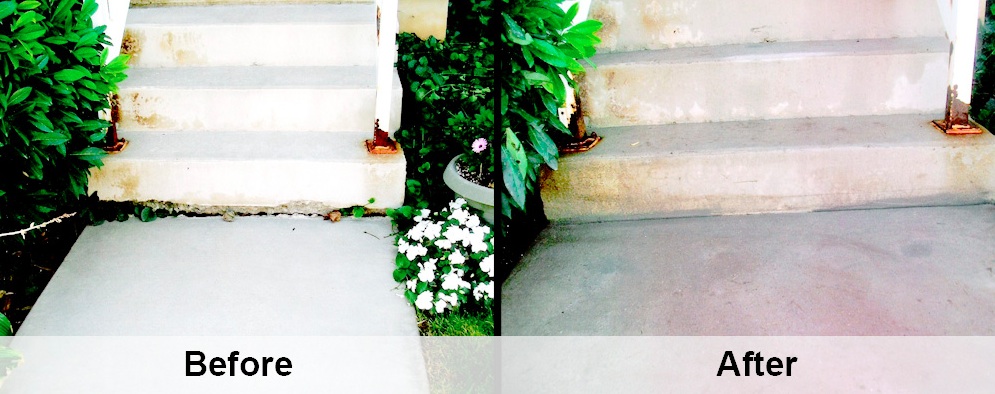
Concrete stair leveling fixes uneven, cracked and crumbling stairs. You don’t have to tear out the structure and you don’t have to depend on a superficial patch job. You can get an affordable, long-lasting solution that resolves the root cause of the problem.

Signs to Watch For

Watch out for a few key problems that signal you need concrete stair leveling. First, if you go outside after a rainstorm and you see water pooling on the steps where it didn’t before, it’s a sign that the step is now tilted due to shifting.

You may also notice cracks. Horizontal cracks commonly show up on the underside of each step when the structure begins to sink and pull away from its previous stable position.

Why Is it a Problem?

What’s the harm in having the occasional pool of water and a few minor cracks in your concrete stairs?

It’s more serious than you might think.

Issues with your staircases are never just superficial. Stairs must be stable for your safety, and for the safety of your family and any guests on your property. Even if your safety wasn’t a concern, building code dictates that the problem be repaired. In the interim, the damage will only progress, and the risk of injury and noncompliance with the law only grows as well.

Why Patching Doesn’t Always Solve the Problem

You may think you can go to the home improvement store, buy some concrete and simply patch up the crack, or even out the tilted step. But that’s not going to fix the problem.

Unless you restabilize the entire structure through concrete stair leveling, then the soil shrinkage, erosion or whatever is causing the stairs to pull apart, will only continue to get worse. Putting a quick fix in place is simply a waste of time, energy and resources.

How it Works

With concrete stair leveling, you need precision. Stair height must be correct, or else you’ll still have a safety issue.

When the technicians drill small holes in the surface, inject the concrete-like grout beneath and raise the sinking portion, they ensure you’ll have a firm foundation to walk on for years to come.

Call Lift-Up Today

Want to learn more details? Get in touch with Lift-Up Concrete today and explain the problems you’re having with your concrete staircase. You will get helpful, friendly service when the technician comes out to look at the issue, and you’ll get a free, written quote in hand before any work begins. Find out today if concrete stair leveling could be the solution you’re looking for.