Category Archives: Blog

Heaving vs. Settling Concrete: What’s the Difference?

Heaving and settling concrete are two separate issues, caused by different external factors.

Whether the surface in question is your patio or your driveway, you need to get to the bottom of the issue to find a solution that lasts and prevents more damage.

Heaving and settling concrete

How can you tell if it’s heaving or settling concrete that’s causing dips, cracks and general all-around damage to your slab?

What Causes Settling?

Settling concrete is a common problem in slabs that were poured without proper soil compaction beforehand. If pockets of air are left in the ground under the structure, over time the weight of the concrete will cause them to dissipate, allowing the soil to sink. This creates a settling effect throughout the slab.

Recognize the Signs

Settling concrete is easy to recognize because the concrete sinks, giving it a concave appearance. Some sections may settle farther than others, but they don’t push upward.

What Causes Heaving?

Heaving is caused not by improper soil compaction, but poor soil composition. If the ground beneath the concrete has a high absorption rate, the soil will swell when saturated, then shrink during dry periods. Clay is a common soil type that exhibits these properties.

How to Tell the Difference

With heaving concrete, the middle of the slab often appears higher than the edges, since the surface is being pushed up by the expanding soil beneath.

While settling concrete typically only moves in one direction — downward — heaving concrete moves in both directions, according to the state of the soil below. Because of this, you might see many cracks along the edges of the slab, indicating the concrete has gone through this cycle more than once.

How Can Concrete Lifting Help?

Concrete lifting can correct settling through stabilizing the foundation beneath the slab. Working with a professional can also remedy heaving issues as well, as you’ll get in-depth guidance on limiting moisture saturation in the ground below your slab, and lifting techniques that can restore it to its proper position.

Get in Touch with a Professional

At Lift-Up Concrete, we take all slab damage seriously. Neither heaving nor settling concrete is too big a problem for us to tackle. With our years of experience, we know how to take a strategic approach and repair your surface as quickly as possible, producing long-lasting results. Call us today and share the details about your problem — we’ll provide a free quote.

Repair Commercial Concrete in a Warehouse Right Away

Repair Commercial Concrete in a Warehouse Right Away

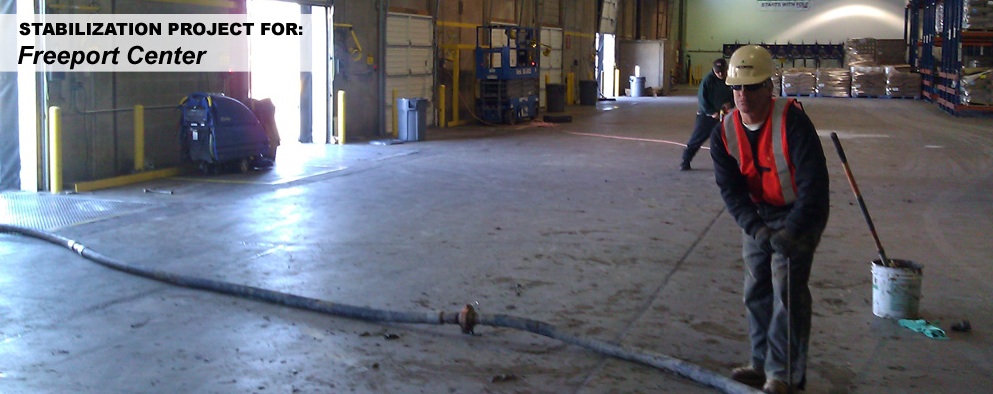
When commercial concrete is cracked or sinking, it’s a serious issue, especially in a warehouse. If you drive machinery and store heavy products on your concrete flooring, you need to be confident in its stability.

You might feel hesitant to initiate a “big” repair project because you’re worried it will interrupt your business’ productivity, but here’s the good news: With concrete lifting, you can get commercial concrete repaired in one day or less, causing the least downtime to your workflow.

Why Is Your Concrete Damaged?

One of the most common reasons for commercial concrete damage is simply wear and tear. Your concrete stands up to a lot of abuse. Boots, forklifts and heavy pallets can wear down your floor quickly. Weather can also play a role. The freeze/thaw cycle can weaken concrete and cause hairline fractures that could develop into deeper cracks.

Another serious cause of damage is inadequate preparation of the subfloor. If the soil was not compacted and stabilized, erosion and evaporation can lead to empty pockets beneath the concrete. When concrete is not supported, a heavy load can lead to a bowed floor.

Regardless of why your concrete needs attention, these are the four top reasons to get it fixed immediately:

  • Guard Your Company against Liability

When you spot damage, there’s no time to waste. This is mainly because if an accident happens as the result of the crack, you’re liable for injuries. Protect your company from a lawsuit and take floor damage seriously.

  • Create a Safe Workplace

Employees can tell when employers care about them. If you make it a priority to create a safe work environment, your employees will see that you value them and their well-being. Repairing commercial concrete cracks is important because even though they may look superficial, they can weaken the entire building.

  • Maintain Property Value

If you own your commercial property, upkeep goes a long way in preserving the building’s value. Someday you may want to sell your building and upgrade to a bigger one. Make sure you maximize your return on investment by fixing problems immediately.

  • Putting it Off Only Makes Matters Worse

Concrete damage never gets better when it’s ignored. Prevent cracks from lengthening and widening. Stay proactive and stop commercial concrete damage in its tracks.

Trust Lift-Up Concrete when your warehouse’s commercial concrete isn’t in good condition. We can lift, level and seal all cracks quickly and affordably. Are you ready to get your free quote?

Driveway concrete repair

Driveway Concrete Repair Can Help with Water Drainage

Driveway concrete repair is more than a vanity measure — it can be one of the main ways to prevent flooding and foundation damage. If you research all the reasons homeowners make repairs to their house at any time, chances are the vast majority of problems are caused by water. Water is enemy No. 1.

If your water drainage system isn’t functioning properly and your driveway is broken and sinking, driveway concrete repair can help.

Driveway concrete repair

Settlement and Erosion — It’s a Bad Combination

It’s hard to say what came first — settlement around your home’s driveway and foundation or soil erosion. What you can say is that both issues are feeding off each other and contributing to the larger problem: too much water, not enough drainage.

It doesn’t matter how well the soil was compacted before your foundation and driveway were poured. There will always be a certain amount of settlement over time. If settlement is drastic enough, it can change water drainage patterns, which can subsequently affect the level of erosion that occurs around the driveway and foundation. As more soil is eroded, it causes more settlement.

It starts a vicious cycle that is never a good combination for homeowners. You may have water pooling around your foundation and on the edges of your concrete driveway which can eventually start to affect your driveway.

A Cracked, Sinking Driveway Only Makes it Worse

Once enough erosion and settlement have taken place underneath your driveway, the concrete is weakened. It doesn’t have the same support it used to, so it may crack and sink. In many cases, this cracking and sinking only make matters worse. It may direct the water where you don’t want it to go, and mess up drainage patterns even more. What’s the answer?

Why Slabjacking Is the Best Option

Driveway concrete repair can stabilize the slab before it gets any worse.

The slabjacking method involves pumping grout beneath the driveway, returning it to its previous normal level. It also eliminates voids under the surface where erosion is taking its toll. It makes settlement less of an issue. You can then adapt your water drainage system as needed, without any fear it’s going to keep harming your concrete.

Major Positive Side Effect? Enhanced Curb Appeal

When you invest in driveway concrete repair, your driveway will be flat and level again — no cracks or trip hazards. Boosting your curb appeal is a definite plus, and it’s usually the reason our clients call us at Lift-Up Concrete. We will give you a free quote for concrete repair when you call us today!

Concrete Repair Myths

5 Common Myths About Concrete Repair

Concrete repair isn’t always the most exciting topic, but it’s necessary when your structures need work. Unfortunately, there are some myths out there about concrete repair. Don’t believe everything you hear!

Myth #1: It’s Extremely Expensive

The most pervasive myth is that fixing concrete is expensive. This is false, but it’s clear why many people continue to believe it. It is expensive to tear out a concrete structure and replace it with a new one. When you count the cost of re-landscaping the area around the new slab, it’s even more.

But repair only — that means working with the structure to restore it to its previous stable condition — isn’t expensive at all, not when you compare it to the alternative. You can cost-effectively restore your damaged, sinking slab without spending more than you can afford.

Myth #2: It’s Easy to Do on Your Own

While repair is cheaper than replacement, trying to cut corners by doing the repair yourself isn’t the best idea. Concrete is one of the most popular building materials in the world, and in some cases you can pour and set concrete on your own, without much experience. But making repairs? That’s something best left to the professionals.

Slabjacking requires specialized tools that aren’t sold at home improvement stores. If you want to get the longest-lasting results from concrete repair, it’s better to hire an experienced team — you’ll save time and money.

Myth #3: It’s Always Effective and Fast

It is possible to repair most concrete structures, even when it seems like they are past their useful lives, but don’t be fooled — concrete repair isn’t a simple project. Many homeowners have issues that are easy to resolve in just a few hours, but many factors, from the extent of the damage to the temperature outside, can impact your project.

It’s best to schedule a free consultation with a professional before you bank on a fast concrete repair.

Myth #4: Your Slab Is Flat and Level — You’ll Never Need Repairs!

Just because your concrete looks good now does not mean it always will. Many structures are affected by outside forces, such as soil erosion. You can talk with our team now, before you have any concrete damage, and we can help you prevent future issues by addressing water drainage problems and more.

Myth #5: Just Fill Surface Cracks

Don’t depend on a repair as the ultimate cure. If your concrete is cracking and sinking, you need to address the root cause of the problem and fix that too! Otherwise, no repair will last long.

At Lift-Up Concrete, we do more than just basic concrete repair. We ensure the highest quality performance of your concrete structure by fixing superficial damage but also digging deep and uncovering the bigger problems. You can trust our team to manage your project with care, just like we would fix the concrete at our own house. Call us today to set up your free consultation.

Sunken Steps

Hidden Concrete Problems You Might Not Notice Right Away

It’s common for concrete problems to grow slowly over time, until the homeowner is shocked at how drastic the issue has become. The key to careful concrete maintenance is knowing where these hidden problems could come up and planning a repair — before the damage is too extreme for a simple fix.

At Lift-Up Concrete, we see countless hidden concrete problems that plague our clients, but there are common three signs that something is about to go wrong.

The Surface Is Too Smooth

There’s a reason you see indents in most poured concrete surfaces. They’re called control joints and they’re vital for limiting any future cracking.

After concrete is poured, the curing process, temperature changes, soil settlement and more all have an effect on how the slab solidifies. Control joints allow for concrete movement — if the concrete cracks, it will happen along the control joint, not randomly. This helps preserve the look of your slab as well as reduces the chance of excessive cracking and weakening of the surface.

If your concrete is super smooth, meaning there are no control joints, it’s time to call the installation contractor — you have a problem. No control joints, or control joints placed in the wrong locations, have the potential for major cracking.

Hairline Cracks That Are Slowly Widening

Concrete cracks are a fact of life. But small hairline cracks aren’t anything to worry about, right?

Here are the facts: You should monitor all concrete cracks. It’s easy to ignore or overlook a crack that’s not too large, but then you might notice the crack is suddenly growing much wider. When did this happen?

If the crack goes deep enough, you could start to see water seeping up from beneath the slab, and the cracked portion of the concrete could start to sink. Call a repair contractor right away!

Natural Subgrade Movement

When erosion carries away the subgrade on either side of your concrete slab, it’s clear you could soon be dealing with sinking concrete.

But some subgrade movement is hidden — it’s impossible to spot. Settlement can open air pockets deep underneath the slab. Groundwater can dissolve sandstone particles and wash away some of the concrete’s support. Natural gas extraction can also cause subgrade to shift, affecting your slab’s stability. It can cause issues that you don’t notice until after the fact, but not to worry — you can still fix it with Lift-Up Concrete’s help.

Call us today to get affordable, fast repairs for all your concrete problems. We are here to help!

Common Concrete Problems

The Most Common Concrete Problems

Common concrete problems affect lots of homeowners, but it doesn’t mean you have to live with subpar concrete. It’s possible to fix it — that’s the good news. But before you think about remedies, it’s important to identify the problems.

Uneven, Tilting Slabs

When a void forms underneath a slab, possibly due to soil erosion or settlement, it creates an unstable environment. There is no longer a reliable foundation for the surface, and as a result, you might notice large areas of your driveway, walkway, patio or sidewalk starting to sink.

This creates an uneven, hazardous area, and the tilting gradually gets worse. Unless you find a way to restore the stability, the problem will only continue to grow.

Sinking Staircases

The same problem can affect your concrete steps, only in this case it’s even more dangerous. You can’t have your guests walking up and down slanted, pitched steps. That is a recipe for disaster in the form of a trip-and-fall accident, and you could be held liable for the injury.

Crumbling, Cracked Surfaces

Sometimes tree roots grow beneath slabs and displace the concrete, creating cracks which begin to crumble at the edges.

Perhaps during the initial installation not enough control joints were placed to minimize major cracking. Freeze/thaw-cycle damage could also cause this issue, which occurs when the concrete absorbs water, then refreezes and expands, putting stress on the material.

Scaling, Spalling or Crazing

Is your slab starting to flake and chip? This is known as scaling or spalling and is typically caused by freeze/thaw damage, improper curing or incomplete finishing. Luckily, this issue can be fixed by simply refinishing the surface — it doesn’t pose much of a structural threat. It’s simply an aesthetic issue.

Tiny cracks on the surface of the slab are referred to as crazing. These microscopic cracks don’t extend into the slab, so they aren’t cause for concern.

What Does Concrete Lifting Fix?

You don’t have to settle, and neither does your concrete! Lift-Up Concrete can help. We can quickly fix common concrete problems, such as the major trip hazard your sinking concrete walkway is causing.

Concrete lifting can stabilize and level countless concrete structures — basically anything that’s made of concrete and sinking! Let us offer cost-effective solutions to your common concrete problems. We start by giving you a free quote, so call today!

concrete repair contractor

What Should You Ask Your Concrete Repair Contractor?

The search for a concrete repair contractor who cares about your interests, puts you first and offers high-quality, long-lasting results is on. You’ll want to interview candidates, read reviews and look at before-and-after pictures. And don’t forget to ask questions about your specific project.

Will Concrete Lifting Work for Me?

You may think slabjacking could solve all your concrete problems, and you’re probably right — it does fix quite a few ugly issues with concrete structures. However, before you sign a contract, ask your concrete repair contractor for details. How exactly do they plan to resolve the problem? What will the finished product look like?

You should get a straight answer from your contractor if they’re experienced, but have realistic expectations about what they will achieve.

How Many Years Have You Been in Business?

Speaking of experience — how long has this concrete repair contractor been in business? Ask them how many projects they’ve completed in the past year and for the names and phone numbers of their most recent clients. Get specific.

Before you invest in a professional’s services, you should know who you’re dealing with, and there’s no better way to find out than by asking their previous clients.

What Kind of Equipment Do You Use?

You can tell a lot about a company by the condition of their equipment. Ask them what machines they use to fix concrete slabs and how each one works. They should be able to fully outline the process, explaining the function of each piece of equipment. It’s a sign of a contractor who respects the work process and the tools they use to earn their living.

Do You Offer a Workmanship Warranty?

Will your contractor be around to follow up on any issues that plague your concrete down the road, or are they a fly-by-night company that’s here one day and gone the next?

Make sure the company you choose has a history of thoroughness and dedication to customer satisfaction. You should be able to depend on them to guarantee their work.

Are You Licensed?

Many states require licenses and insurance to practice. Ask the contractor of your choice if they have all the right paperwork to show they’re working legally and safely. You don’t want to be held liable for any worker injuries on your property, and you want to make sure you’re dealing with an upstanding business.

Trust Lift-Up Concrete

With years of experience and a fully licensed, insured and bonded staff, there’s no better concrete repair contractor than Lift-Up Concrete. We serve Utah home and business owners who are looking for affordable, quality solutions to their concrete issues. Call us today for a free quote.

Concrete Driveway Oil Stain

Removing Concrete Driveway Oil Stains: Is it Possible?

Concrete driveway oil stains might not bother you on someone else’s property, but when they’re on yours, you know you need solutions! Stains take away from your curb appeal and your enjoyment of your property. Get rid of those concrete driveway oil stains once and for all.

Whatever You Do, Don’t Scrub

Your first instinct may be to get a huge bucket of soap and water and a thick, hard-bristled scrub brush and get to work. Beware: Elbow grease isn’t going to solve this one.

Scrubbing doesn’t work because all it does is spread the oil everywhere. Since concrete is a porous surface, this means more of the oil is absorbed, enlarging the stain and simply making your job harder.

The Keys? Absorption and Patience

There are two keys to success when it comes to ridding your concrete of oil stains: absorption and a large dose of patience.

Instead of pushing the oil farther into the concrete with a scrub brush, you need to draw it out. And you’ll have to allow some time for this to happen — there is no instant fix.

Follow These Steps

First, mix one ounce of trisodium phosphate (TSP) with one cup of water and mix thoroughly. Then add one cup of absorbent material. You could use baby powder or talcum powder. Once mixed, it should look like a white paste.

Wear gloves and protective eye gear and spread this paste over the stain with a trowel. It should be about a half-inch thick.

Let the paste dry for the next 24 hours. Make sure it doesn’t get wet. Once you’ve waited a day, scrape away the paste and dispose of it. Use a nylon brush and water to clean the area. Wire brushes can leave behind steel particles and lead to rusting.

You will see the stain has started to fade, but it will likely need two to three additional rounds of paste, unless it’s a new stain. It’s possible to get most of the oil out of the concrete, though you may still notice a slight discoloring, especially if the stain was there for quite some time.

What Else Is Wrong with Your Concrete?

Chances are, concrete driveway oil stains aren’t the only issue with your eyesore of a surface. Many homeowners deal with cracking, leaning and sinking areas of their concrete slab as well. Is this an issue for your home?

There’s a remedy for that too — Lift-Up Concrete. Using slabjacking, we quickly and affordably stabilize your sinking concrete, level out the surface and seal the cracks.

By dealing with concrete driveway oil stains and taking advantage of our on-site assistance with sinking concrete, you can have your driveway looking as good as new this summer. Call us today for a free quote.

reasons to hire a concrete repair professional

Concrete Lifting Helps You Pass Home Inspection

Passing home inspection is the final hurdle to scale before you can officially slap that “sold” sticker on the sign out in the front yard. From the day you start preparing your home to sell to the date of your first showing is a long, stressful process that most homeowners are happy to see come to an end.

If you’re at this stage of the home-selling process and you’re having concerns about some underlying issues you fear the inspector may bring up, or if you’re still at the beginning, starting to prepare your house to go on the market, consider this: Concrete lifting could help resolve two of the most common reasons home inspectors warn buyers against — water damage and structural issues.

The Home Seller’s Nemesis: Water Damage

Home inspectors will take note when water routinely pools near a home’s foundation. In many cases, this is due to improper soil grading or poor landscaping. It could also be caused by slanted, broken concrete that directs water toward the foundation instead of away from it.

No matter the reason, home inspectors view poor drainage as a potential basement leak, which could be costly to the new homeowner.

What’s Even Worse? Structural Damage.

Structural damage is by far the biggest problem your home could have. The reason inspectors notice water damage and improper drainage immediately is because they know it could be one of the main causes of structural damage.

A soaking-wet foundation can crack and jeopardize the home’s stability. This is why it’s important to address both of these issues before your inspector comes calling, and concrete lifting can help.

How Concrete Lifting Can Save the Day

Concrete is commonly used for landscaping purposes, whether for a driveway, patio or staircase. Soil erosion can cause these structures to tilt and sink, potentially causing water to pool around your home’s foundation.

Concrete lifting is a method of injecting a stabilizing mixture beneath the concrete surfaces, raising them back up to their previous level. Not only does this make them safer to walk on, it can also easily resolve any water pooling issues plaguing your home that can make it unlikely you will pass your home inspection.

Here’s more good news: Concrete lifting is a fast, affordable procedure that can be completed in one day. You can call your inspector to come over and take a look right after — the problem will be resolved.

Get Your Home Fixed, Get Your Home Sold

Lift-Up Concrete uses concrete lifting to fix these two major property issues, providing a functional foundation for the future and above all else, peace of mind.

Contact us today for a quote and learn more about the process and how it works. Let us help you pass your home inspection so you’re free to finalize your sale and move forward.

concrete-lifting-pros-cons

The Pros and Cons of Concrete Lifting

Every homeowner should know the pros and cons of concrete lifting before they hire a contractor to fix their sinking driveway, patio or pool deck. If you’re new to this concrete repair method, get ready to be pleasantly surprised. You aren’t always required to tear out and re-pour concrete structures — there’s a better way!

How Does it Work?

Concrete lifting is the process of raising a slab by injecting stabilizing grout underneath. First, your contractor uses a small drill to create holes in the sunken portion of the slab. Then, they attach a pump which fills the void beneath the slab with material that’s strong enough to raise it back to its original position.

Once the slab is securely in place, they patch and seal the hole and your structure looks as good as new! It’s a straightforward process, and homeowners across the country depend on it for repairs. When you’re trying to decide if it’s the right repair option for you, learning about the pros and cons of concrete lifting can help.

Check Out the Pros:

Here are the top three reasons homeowners depend on concrete lifting, also known as mudjacking or slabjacking:

1. It’s Extremely Affordable

Your service appointment doesn’t take long. You don’t pay for hours and hours of labor as you would with a tear-out project. You also don’t pay much for materials — you only need a small amount of grout to fill voids underneath your slab. It’s the most affordable way to fix your sinking concrete, no question.

2. It’s Fast and Effective

You don’t have to wait weeks for the concrete to cure — you can walk and drive on the surface the same day. It works on even the most dramatically sunken slab surfaces, enacting major transformations in an extremely short time.

3. It Preserves Your Landscape

You don’t have to worry about concrete demolition ruining your landscape. Your yard doesn’t become a construction zone. Your flower beds stay intact.

Any Cons You Should Know About?

As a home concrete repair method, concrete lifting is one of, if not the best option. But still, you should think about its long-term effectiveness before you invest any money in this repair, no matter how minimal the cost.

Make sure to address the underlying reason your concrete is sinking. For instance, if soil erosion due to poor drainage is washing away the earth that supports your concrete slab, concrete lifting isn’t going to be effective for long. You will only have the same problem once again.

On the other hand, if you’re able to solve the root problem for the sinking concrete, the fix will last.

Want to learn more about the pros and cons of concrete lifting? Give our team a call and we will explain why this is the top repair method, the one you should count on to revamp the look of your home. Lift-Up Concrete offers free estimates personalized to your needs!